
The Hangeul Museum Is Closed. This Seoul Exhibition Is Where to Go Instead.
From 1926 to Infinity marks 100 years of Hangeul Day at the National Museum of Korean History through Feb. 9, 2027. Build a Gwanghwamun half-day around the show instead of a trip to the closed Yongsan museum.
Why the Hangeul Museum is not the stop
If your last Seoul trip included the National Hangeul Museum in Yongsan, next to the National Museum of Korea, leave that afternoon off the itinerary. A fire on February 1, 2025, during construction work closed the building for restoration and expansion. Museum officials say the Yongsan campus will stay shut into late 2028. The collection was moved for safekeeping. There is nothing to enter on Seobinggo-ro right now.
That lands hard for returning Korean diaspora travelers who used the Hangeul Museum as the one stop that explained the script without a full palace day. The fix this season is not another Yongsan errand. It is a different museum, a short walk from Gwanghwamun Square.
Where the show actually is
From 1926 to Infinity is the National Hangeul Museum’s special exhibition for 100 years of Hangeul Day. It is installed in the third-floor thematic gallery of the National Museum of Korean History at 198 Sejong-daero, Jongno-gu. The Korean name is 대한민국역사박물관. Some English listings still call it the National Museum of Korean Contemporary History. Same building, same address: the history museum on Sejong-daero, not the Hangeul Museum in Yongsan.
The museum’s own English page lists the run as October 2, 2026, through February 9, 2027. Admission is free. Hours are 10 a.m. to 6 p.m., with Wednesday and Saturday nights open until 9 p.m., and last entry an hour before closing. Third-party calendars sometimes still file the show under the Hangeul Museum’s Yongsan listing even when they note it is hosted off-site. Before you leave the hotel, open much.go.kr and check the special-exhibition dates for that week. Listings disagree. Trust the museum’s page.
What you will find inside
The show treats Hangeul Day as a civic habit people kept observing. It is bigger than a children’s alphabet lesson. It moves through three parts: how the day began, what “Gagya” meant as an early name for the script and its teaching charts, and how a century of commemorations carried the writing system through colonial pressure and into the present.
The first Hangeul Day, in 1926, was called Gagya Day. It was timed to the eighth 60-year cycle after King Sejong promulgated Hunminjeongeum. Opening coverage put roughly 121 pieces on view, assembled with the Korean Language Society and the King Sejong the Great Memorial Society. Look for early documents that use the word “Hangeul” itself, a graduation certificate for the linguist Choi Hyun-bae from the Joseon Language Institute, and the manuscript of the Great Dictionary of the Korean Language. That dictionary was compiled from 1929 to 1942 and recovered from a Seoul Station warehouse in September 1945, just after liberation. Teaching charts and commemorative print fill out the rooms; some guides also mention an interactive letter station near the end. Give the floor ninety minutes to two hours. If Korean is rusty, read the labels slowly. The objects do the teaching.
The rest of the building covers contemporary Korean history: twentieth-century politics, daily life, and national turning points. If the special show is why you came, you do not need to finish every permanent gallery the same afternoon. Save that for a second visit if the family day already feels full.
A half-day on Sejong-daero
Start at Gwanghwamun Station on Line 5, or walk from City Hall or Gyeongbokgung if you are already in the palace belt. Enter the National Museum of Korean History on Sejong-daero and go straight to the third-floor thematic gallery while you are still fresh. Eat after, not before. Free museums fill with school groups by late morning.
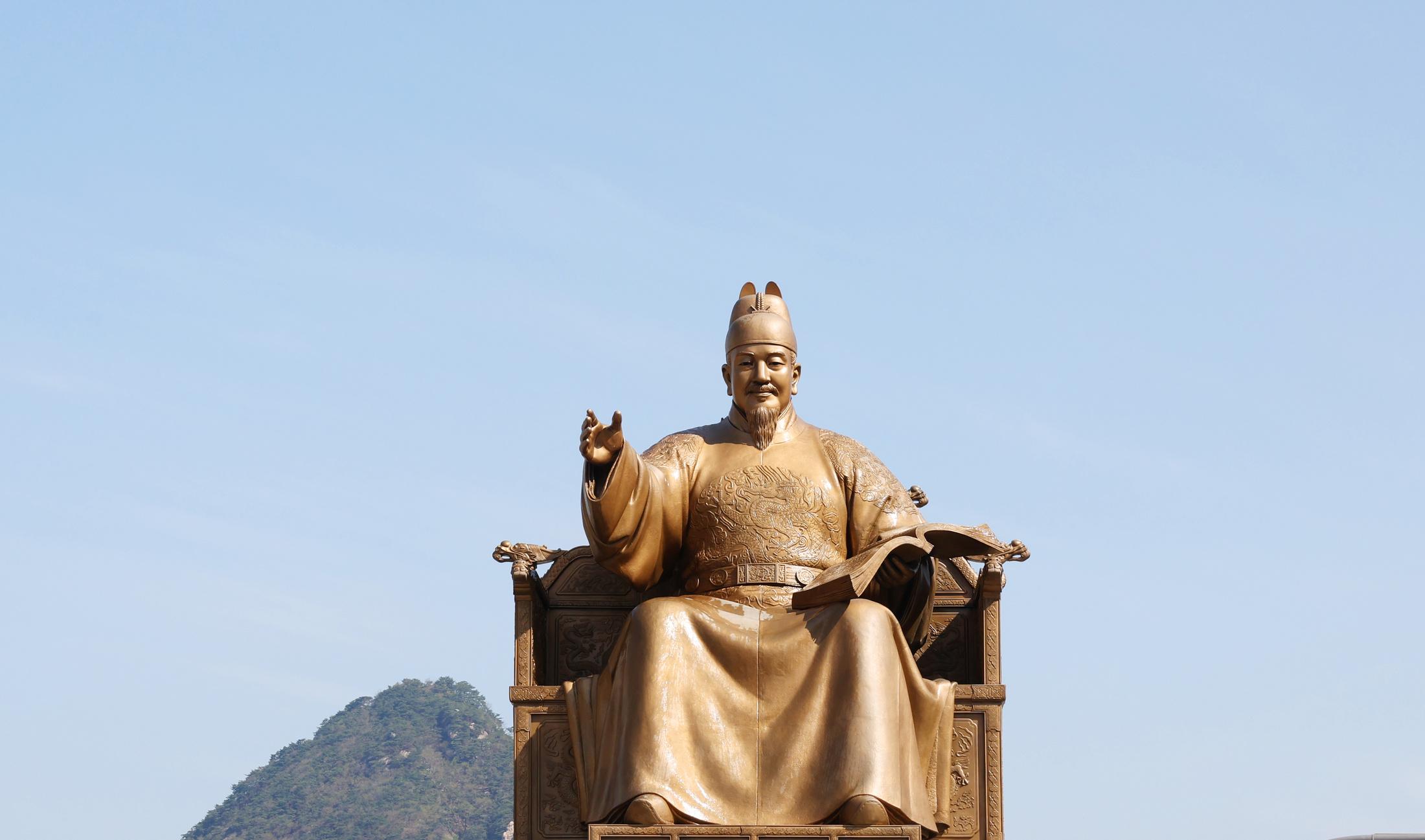
When you leave, step into Gwanghwamun Square. King Sejong’s statue faces the avenue a few minutes from the museum doors. After the galleries, that outdoor stop is the right way to end the script story before lunch. A bookstore café, a simple rice-and-soup spot toward Insadong, or whatever your cousins already booked will do. Leave the rest of the afternoon open. One exhibition, one square, and one meal is enough for a half-day that still leaves room for relatives.
If someone in the group still wants “the Hangeul Museum feeling,” say plainly that Yongsan is closed through late 2028 and that this Jongno show is the centenary substitute. Skip Ichon Station as a backup stop.
Check the dates once more
From 1926 to Infinity runs through Tuesday, February 9, 2027, free, on the third floor at 198 Sejong-daero. Reconfirm hours and any temporary closures on the National Museum of Korean History site the morning you go. Wednesday and Saturday late openings help if jet lag owns your mornings.
The Yongsan Hangeul Museum will reopen later. Until then, put the Sejong-daero address on the family chat, not the old Ichon walk.
Related stories
Diaspora Summer: Build a Heritage Trip Without the Guilt Itinerary
One relative day after you’ve slept. Then markets, subway, and empty afternoons—with jangma and typhoon season treated as logistics, not vibes.
6 min · Aug 3, 2026
The Return Trip After Assimilation
The second trip is for the person you actually are.
3 min · Jul 20, 2025
After the K-Drama: How to Do Seoul Without the Set-Jet Checklist
Ninety-four percent say K-culture sparked interest in Korea. Here’s a neighborhood-first week that does not turn into a location scavenger hunt.
6 min · Aug 3, 2026
What If Your Parents' Homeland Does Not Feel Like Yours?
Disappointment is data, not betrayal.
3 min · Jan 28, 2026