The Top 5 Airports in Asia for 7+ Hour Layovers
We ranked Asia-Pacific’s busiest hubs for long connections, transit hotels, city access, and North American routing.

Introduction
No one likes layovers. When you cannot avoid them, the right hub can turn seven or more hours from dead time into a preview of a city you might book later, or at least a meal, shower, and nap you will remember more than the lounge Wi-Fi password.
We started with the busiest airports in Asia-Pacific by 2025 passenger volume and scheduled capacity: Tokyo Haneda, Shanghai Pudong, Guangzhou Baiyun, Beijing Capital, Delhi, Seoul Incheon, Singapore Changi, Shenzhen, Kuala Lumpur, and Bangkok Suvarnabhumi lead the OAG and ACI rankings.
Volume alone is not layover quality.
We filtered for North American and transpacific connectivity, airside and landside amenities (transit hotels, dining, showers), immigration rules that allow short city entry for many passports, and realistic travel time to a walkable neighborhood.
Shanghai, Guangzhou, Beijing, and Delhi drop off for most US and Canadian passport holders on short exits without visa planning. Bangkok and Shenzhen are strong hubs but weaker on quick city access from the terminal.
What follows are our top five for seven-plus-hour layovers, counted down from fifth to first.
5. Kuala Lumpur International (KLIA)
KLIA handled roughly 39.5 million scheduled seats in 2025 per OAG, ranking ninth in Asia-Pacific, smaller than the Chinese megahubs but a genuine ASEAN connector with growing North American links through Malaysia Airlines and partner networks.
The KLIA Ekspres train runs nonstop to KL Sentral in about twenty-eight minutes, which makes a long layover enough for a meal in Brickfields or a quick look at the city without heroic taxi math.
Inside the airport, the Sama-Sama Hotel and the Jungle Boardwalk between KLIA and klia2 give you sleep and walking paths without leaving the airside bubble.
Dining at klia2 is denser than many downtowns.
KLIA is the pick when your itinerary connects through Southeast Asia and you want a layover that can become Kuala Lumpur: not just a transfer gate.

4. Hong Kong International (HKG)
Hong Kong International remains one of the world’s busiest international passenger airports; London Heathrow and Incheon bracket the top of ACI’s international rankings, and HKG stays in that tier for global transfer traffic.
The Airport Express reaches Hong Kong Station in about twenty-four minutes, and SkyCity links terminals to hotels and retail without a visa run for airside-only plans.
Terminal dining runs from Cantonese dim sum to global chains at a standard that embarrasses most US hubs.
Cathay Pacific and oneworld connections from North America are the obvious use case.
Visa-free short visits apply for many Western passports, but check current entry rules before you plan landside exit.
HKG rewards travelers who want harbor-city energy on a long connection: not a full Hong Kong week, but enough to learn whether you will return.
3. Tokyo Haneda (HND)
Haneda rose to third globally in total passengers in 2025 with about 91.7 million travelers, per ACI World, ahead of every Asian hub except the scale of Dubai when you zoom out worldwide.
For layovers, Haneda’s advantage is proximity: the Tokyo Monorail reaches Hamamatsucho in roughly twenty minutes, putting you in reach of ramen, convenience-store excellence, and neighborhood walks that Narita cannot match on the clock.
Terminal food courts include Edo Ko-ji, a stylized Showa-era street with sit-down options that beat eating from a bag at your gate.
JAL and ANA both use Haneda heavily; US carriers including United and American serve it from the West Coast.
Immigration lines spike at peak banks, so count ninety minutes back to your gate minimum.
One bowl, one neighborhood, one honest buffer, that is Haneda layover math.
2. Seoul Incheon (ICN)
Incheon ranks sixth in Asia-Pacific by scheduled seats in 2025 and third globally for international passenger traffic in ACI’s rankings, behind Dubai and London Heathrow.
That mix matters: ICN is built for connection traffic, not only domestic volume.
The airport runs free Incheon Airport Transit Tour programs for eligible passengers on long layovers, plus Korean cultural exhibits, jjimjilbang-style spa options, and transit hotels inside the terminal complex.
Korean Air and Asiana anchor the hub; US nonstops from Seattle, San Francisco, Los Angeles, and New York are routine.
Quick immigration to Incheon city or Seoul proper is possible on seven-plus hours if you respect return security time, but the airport itself is a legitimate destination when you are jet-lagged.
ICN is the layover where rest infrastructure is as serious as the city preview.
1. Singapore Changi (SIN)
Changi is the reference airport for long layovers, and the one other hubs are measured against.
About 42.5 million scheduled seats in 2025 per OAG; Singapore Airlines and Star Alliance partners give North American travelers frequent one-stop paths across Asia.
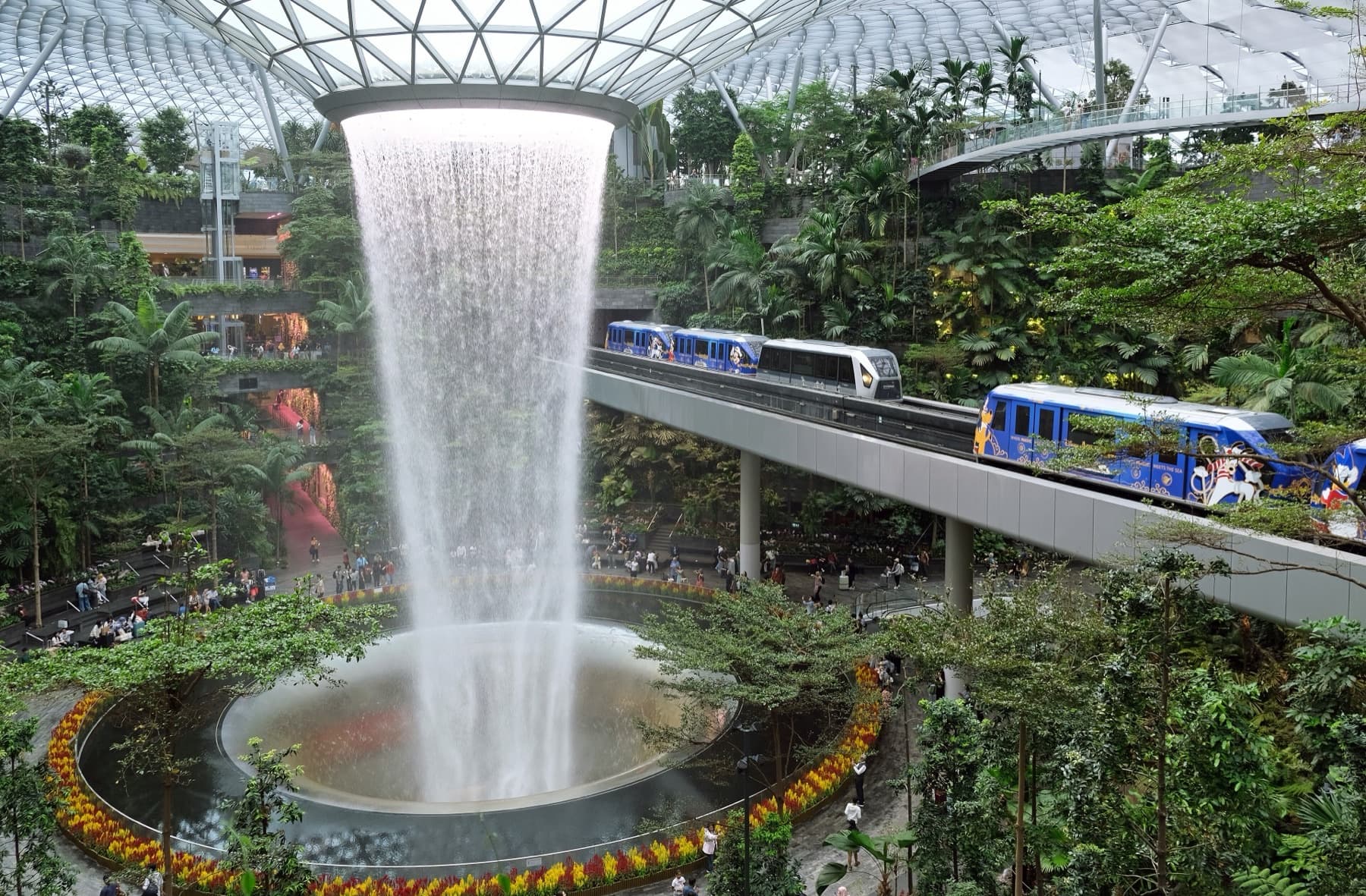
Jewel Changi’s HSBC Rain Vortex: the forty-metre indoor waterfall documented by Changi Airport Group and Safdie Architects, sits landside but is reachable without leaving the airport campus.
Hawker-style food nodes, showers, lounges, and the MRT east-west line put the city thirty to forty minutes away when visa-free entry applies.
Many diaspora travelers already know Changi as a transfer point; the upgrade is treating seven hours as enough for one sitting-down meal in the city or a deliberate Jewel walk, not only duty-free.
If you have one long layover to plan well, start here.
Related stories
The Singapore Layover That Becomes a Weekend
Singapore is the rare hub where a layover can rewrite your route map, if you plan time and luggage honestly.
4 min · Jun 7, 2026

The Layover Is a Taste Test
Six hours in the right airport can change your route map.
3 min · May 10, 2026
The Best Airports for Turning a Layover Into a Micro-Trip
Compare Changi, Incheon, Haneda, and Doha for a long layover, with realistic guidance on immigration, city access, airport amenities, and return buffers.
3 min · May 10, 2026

Your First Trip to Asia: A Culturally Fluent Starter Guide
How to pick your first Asian city, pace the week, and avoid turning the trip into heritage performance or continent tourism.
10 min · May 5, 2026