ASEAN Has Signed Its Digital Economy Agreement. What Does a Cross-Border Seller Watch Next?
Friday’s Canada–ASEAN story was about market access. This one is ASEAN’s own digital rules after the Nov. 14 signing in Manila: what electronic transactions and cross-border commerce cover, the expected early-2027 start, and what still needs an implementation notice before a merchant can act on it.
A different Manila file from Friday
Friday’s Canada story out of Manila was about tariffs and market access that still wait on schedules. Saturday’s signing belongs in a different file.
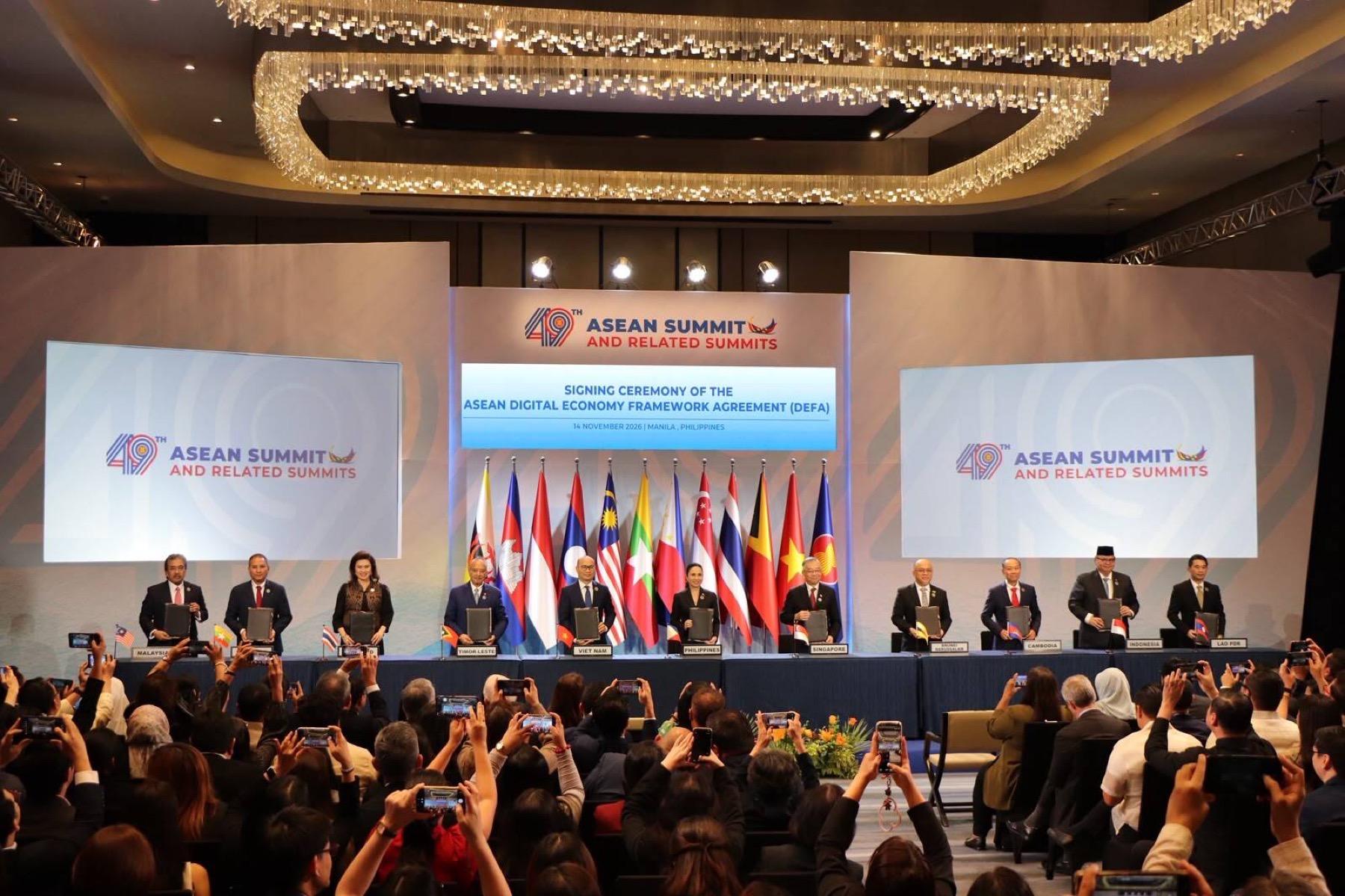
Ministers from all eleven members of ASEAN, the Association of Southeast Asian Nations, now including Timor-Leste, signed the ASEAN Digital Economy Framework Agreement, or DEFA, at a hotel in Pasay City on November 14. Philippine Trade and Industry Secretary Ma. Cristina Aldeguer-Roque signed for the host. Singapore Deputy Prime Minister Gan Kim Yong signed for Singapore; his portfolio also covers trade at the Ministry of Energy, Trade and Industry. ASEAN Secretary-General Kao Kim Hourn was in the room. When the summit opened on Sunday, Philippine President Ferdinand Marcos Jr. handed him the signed text.
Singapore’s trade ministry calls DEFA the bloc’s first standalone, legally binding digital-economy agreement. Once it takes effect, it is meant to replace the 2019 ASEAN Agreement on Electronic Commerce. Preferential Canadian rates still live in Friday’s Canada–Philippines and ASEAN–Canada calendars. DEFA does not change a customs entry on Monday.
What the pact actually talks about
For a seller moving goods or services across ASEAN borders, the parts that matter are electronic transactions and cross-border commerce.
Singapore’s ministry summary says the deal widens acceptance of e-invoices, e-signatures, and electronic trade documents such as certificates of origin, phytosanitary certificates, and bills of lading. It also points to clearer rules for express shipments. Gan told reporters after the signing that paperless trade paperwork is where companies should feel speed and cost first, if governments turn the commitments into systems people can actually use.
Payments and identity sit next to that. The same brief lists interoperable electronic payments and digital identities for businesses among the early projects members want ready around entry into force. Gan’s version was blunt: if you trade digitally, you need to know whom you are dealing with. The payment tools that started with shoppers are also showing up in business-to-business transfers.
Cross-border data is the other hinge for a merchant. The ministry says commercial and financial data should be able to move without a forced local-storage requirement when the transfer is for commercial purposes, and that firms should not have to hand over source code just to enter a market. Exceptions still apply. Gan named privacy, business confidentiality, and national security as reasons a government can still say no. Members will also move at different speeds, so ready countries can advance without waiting for the slowest.
The calendar that matters is not the photo
Singapore’s ministry says DEFA enters into force 180 days after signing. Count from November 14 and you land around mid-May 2027. Gan told Singapore media he hoped for “sometime early next year.” Kao has said the implementation plan should be ready by May. Treat early 2027, around May, as a working horizon, not a date to print on your invoice template.
The full legal text is not public yet. Reporting based on the ministry factsheet says the ASEAN Secretariat expects to post it early in 2027. Until then, desks are reading summaries, not article numbers a lawyer can cite.
Forecasts will keep circulating. Singapore’s ministry cites the Google, Temasek, and Bain e-Conomy SEA study putting ASEAN’s digital economy at about $368 billion in 2026 and above $1 trillion by 2035. Roque has used a different yardstick: roughly $1 trillion today, with a path toward $2 trillion by 2030. Neither figure tells you when an Indonesian buyer’s bank will accept your e-invoice.
The same Saturday, Asian Development Bank President Masato Kanda announced an ASEAN Regional Platform for AI and Digital Economy. The bank wants to mobilize up to $5 billion in public and private financing by 2030 for digital infrastructure, cross-border payments and IDs, cybersecurity, and AI readiness, framed as support for DEFA. That is a fundraising target tied to the pact, not money already clearing through a merchant account.
What to watch before you change a workflow
Do not rebuild checkout, invoicing, or data storage on the signing photo. Wait for three kinds of paper.
First, the published treaty text from the ASEAN Secretariat. You want the exact wording on electronic documents, payments, data transfers, and the exceptions Gan flagged.
Second, an entry-into-force or domestic notice from the markets you actually sell into. Singapore, Indonesia, Vietnam, and the Philippines will not flip on the same morning, even if the regional clock says May.
Third, a named pilot or regulatory notice that touches a system you already use: recognition of a specific e-invoice format, a payment link between two central banks or switches, or a business digital-ID scheme you can enroll in. Gan said governments are already sorting which payment, identity, and trade-document projects should be ready when the agreement starts. Those project names are what you can act on.
Keep this file apart from Friday’s Canada–Philippines and ASEAN–Canada preference calendars. One is about tariff schedules and rules of origin. This one is about whether your documents, data, and money move digitally under shared rules.
The next date worth circling is the early-2027 text release, then whichever country notice first names the invoice, payment rail, or identity tool your desk already depends on.
Related stories
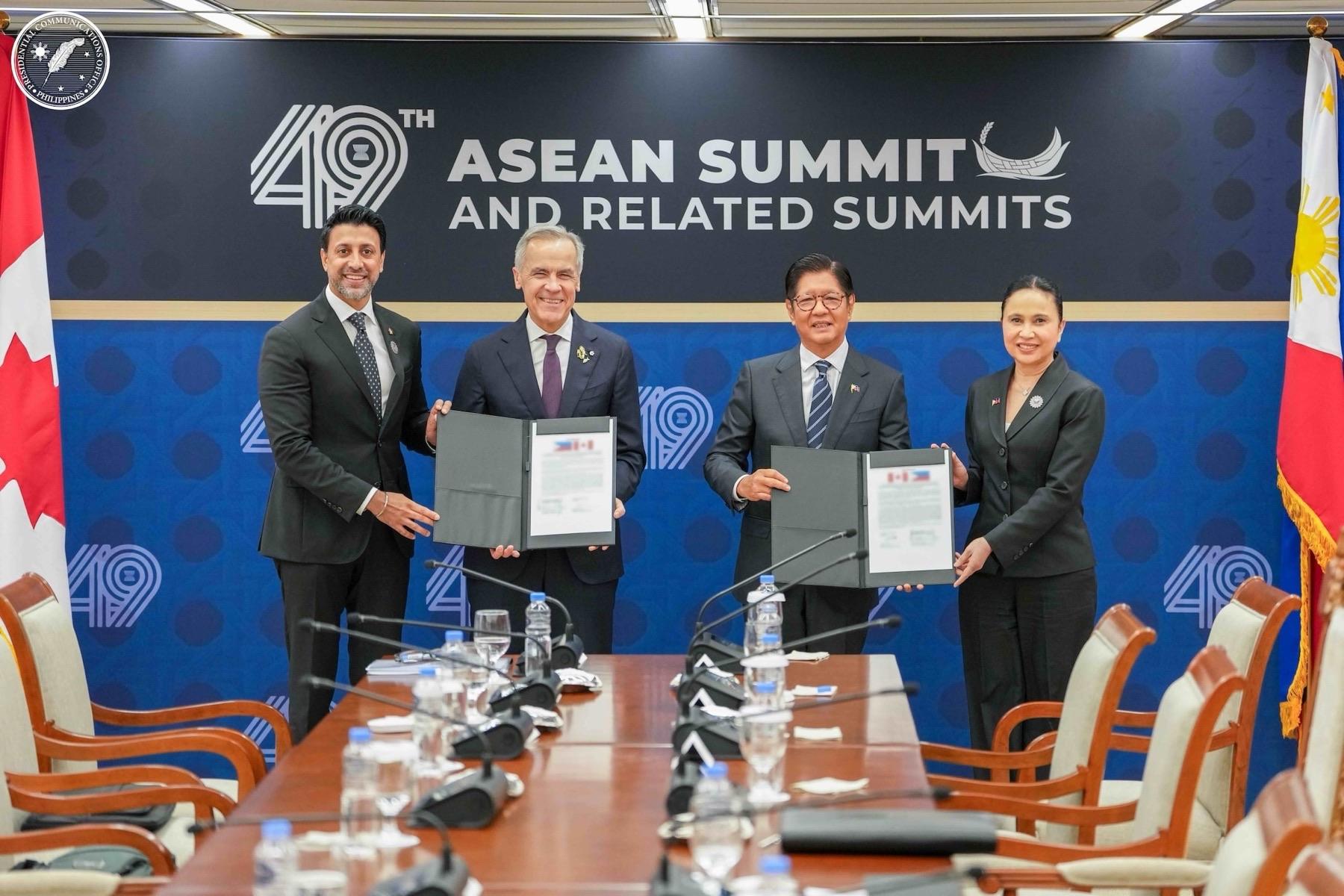
Canada and the Philippines Finished Trade Talks. What Can Businesses Prepare Before the Deal Takes Effect?
Bilateral talks are finished; ASEAN talks are substantially finished. Signature is aimed for 2027. Hold preferential quotes until the schedules and entry-into-force dates exist.
6 min · Nov 14, 2026

Canada’s Indonesia Trade Deal Starts Dec. 1. What to Check Before You Quote
Walk one Canadian product through Indonesia’s tariff schedule, origin rules, and importer handoff, then price a sample container with the assumptions written out.
8 min · Nov 11, 2026
Philippine Startup Week Opens Monday. Who Is Actually Meeting the Founders?
Philippine Startup Week opens Monday in Quezon City. The useful map is Gobi, Foxmont, and Kickstart on the Investors’ Stage, plus Tuesday’s IGNITE X judges and Japan MOUs.
7 min · Nov 6, 2026
Singapore’s Deep-Tech Startups Are Building in China and Selling Toward America
Xnergy, Quikbot, and Quantified Energy build inside China’s clusters and look to America for better invoices. Surviving Shenzhen is the easy half of the sentence.
7 min · Nov 9, 2026
Related global reads
Transpacific Bound
Canada and the Philippines Finished Trade Talks. What Can Businesses Prepare Before the Deal Takes Effect?
Transpacific Bound
Canada’s Indonesia Trade Deal Starts Dec. 1. What to Check Before You Quote
Goldsea
Tuk tuks and Muay Thai: a Bangkok adventure
At the Banquet
The Banquet guide to Singapore
At the Banquet
What a decade of Michelin Singapore actually measures