
Singapore’s Deep-Tech Startups Are Building in China and Selling Toward America
Reporting from Suzhou and Shenzhen this morning shows founders using Chinese factories and suppliers to get to scale, then chasing higher-margin U.S. buyers. The risk sits in the middle: who owns the partnership, and who trusts the origin story.
The commercial split, said out loud
Singapore’s deep-tech founders have been living a two-country business model for a while. On Monday, The Business Times said it plainly from Suzhou and Shenzhen: build where China’s robotics and clean-energy ecosystems can make a product real, then sell toward American customers who will pay more for something that already works.
Tong Chin Fong, co-founder and chief executive of Xnergy, which makes wireless chargers for robots, explained the China half without romance. “We chose China… the most competitive market you can find in the world. And if we survive (there), we will survive anywhere.” The America half is still mostly a destination on the map—higher margins, fussier buyers, longer questionnaires—not a finished revenue pie chart in the Monday coverage.
The interesting part is not the slogan. It is what happens when the cheap factory floor and the expensive customer sit inside one company.
Get next to the makers, or lose the week
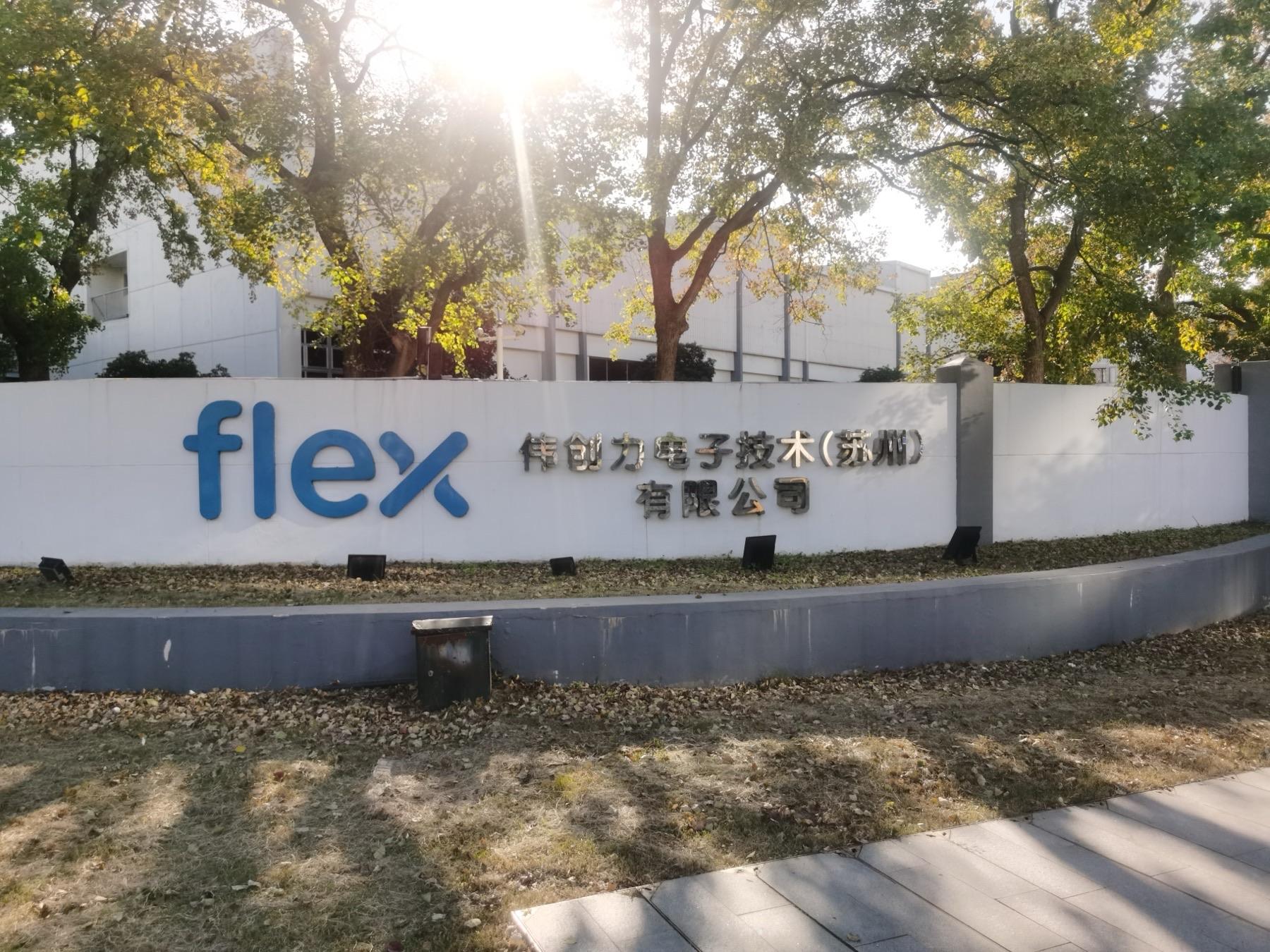
Xnergy’s move was to stop pretending Singapore could match China’s robot cluster on logistics alone. Technology that began at Nanyang Technological University crossed with local robotics partners; manufacturing followed in roughly three years. Tong’s lab is in Suzhou Industrial Park, and the company opened research and production there in 2021, close enough to vehicle makers and robot suppliers that a design change does not spend a month in a shipping queue. He likes a gold-rush image: while everyone chases robots, Xnergy sells the spade—the charger.
The volumes explain why founders tolerate the bruising. When the company started in 2018, Tong told The Straits Times, China produced about 100,000 mobile robots a year. This year one customer alone built that many in seven months. Xnergy has sold around 7,000 chargers worldwide, some riding Chinese clients outward as far as Slovenia.
Quikbot’s Alan Ng made a parallel bet on Shenzhen in 2023. Quikbot’s real product is less the rolling box than the software that hooks delivery robots into buildings and elevators; that software already brings in about 65 percent of revenue. Ng wanted Shenzhen’s engineers, its robot parts houses, and the chance to test a new machine beside the people who build it. Shipping drawings from Singapore and waiting for a container is how you lose a product cycle.
Quantified Energy, from a National University of Singapore solar-research group and co-founded by Khoo Yong Sheng, refuses to enter China’s panel-price war. It inspects panels after they are up—drones, AI, electroluminescence imaging—in a market expected to hold about 1.5 terawatts of installed solar this year. Same country for scale. Same hope that a U.S. buyer will later pay for a cleaner margin.
Partners who make you fast also bind you
China only works for these teams if someone local wants them there. Kow Juan Tiang, Enterprise Singapore’s executive director for China, keeps telling Singapore firms to name a sharp value proposition and to occupy niches that help Chinese companies instead of trying to replace them. Xnergy charging robots, Quikbot wiring buildings, Quantified Energy checking farms—that is the complementary lane.
Complementarity gets you into the industrial park. It also entangles drawings, tooling, and customer introductions with partners who answer to different investors and a different five-year plan. Founders who want American logos later have to decide, early, what stays under Singapore control: the core software, the sensitive components, final test, the entity that invoices. Leave too much undefined and a procurement officer in Dallas will define it for you.
Beijing’s push into advanced manufacturing is why the lane still looks open. Value-added at large industrial firms in that sector rose 13.3 percent year over year in the first half of 2026, against overall growth near 4.7 percent, according to the National Bureau of Statistics. Kow calls technology, healthcare, and green services the pies still growing. Growing pies attract dependents. Dependents write compliance memos.
The U.S. invoice and the origin question
Enterprise Singapore’s Americas side is building the other half of the bridge: more than 250 Singapore companies across 45 U.S. states, and about $66 billion of cumulative U.S. investment by 2024. Lim Seow Hui, who directs the Americas desk, has been frank that Singapore names still barely register there, rivals are sharper, and salaries hurt. New outposts in Austin, Los Angeles, San Francisco, and New York exist to shorten that education.
American logistics and energy buyers will often pay up for a system that already took Chinese factory punishment and arrives with paperwork and a human on the phone. They will also ask where it was made, which export-control bucket it sits in, and whether any piece of the stack trips a customer ban. A Singapore company with NTU or NUS roots does not get a free pass if the bill of materials still runs through Guangdong.
In August, Choon Chong Tay of Temasek-backed Vertex Ventures China told CNBC that China-linked robotics teams chasing U.S. customers need real Singapore operations—hiring, control of critical parts, honest origin and export-control compliance—not a mailbox. He was talking about a different set of companies than Xnergy or Quikbot. American counsel still reads from the same hymnal when the factory is Chinese and the purchase order is American.
Hold both ends of the wire
The founders who make this work will sound boring in a good way. They will know who owns the drawings in Suzhou or Shenzhen. They will sell into U.S. accounts that care about uptime before they chase the most politically radioactive ones. They will budget for two compliance regimes before the first dollar clears. They will keep enough customers outside any single capital’s mood so one week’s headline does not erase the quarter.
Singapore’s job in that setup is to be the company that can explain itself: where the engineers sit, where final test happens, which entity sends the invoice. Kow’s insistence on a clear value proposition is the filter. Fuzzy positioning loses on price in China and on trust in the United States.
Monday’s reporting is a map, not a victory lap. Survive the Chinese cluster, then earn the American margin—if the partnership file and the origin story can travel with the product.
Related stories

Philippine Startup Week Opens Monday. Who Is Actually Meeting the Founders?
Philippine Startup Week opens Monday in Quezon City. The useful map is Gobi, Foxmont, and Kickstart on the Investors’ Stage, plus Tuesday’s IGNITE X judges and Japan MOUs.
7 min · Nov 6, 2026

The U.S.–China Trade Agreement Still Has a Rare-Earth Delivery Problem
Greer and Bessent pressed Beijing on Friday over rare earths and other critical minerals. A license on paper still has to become a tonne on the dock.
7 min · Nov 8, 2026
Asia’s Factories Are Not Moving Together
Korea had the softest chip-exporter reading. Indonesia booked export orders at a survey record.
6 min · Nov 2, 2026
Oracle Scrapped the Tencent Chip Lease
The servers were supposed to sit in Southeast Asia. The pressure still landed on a U.S. cloud company.
6 min · Nov 4, 2026
Related global reads
Transpacific Bound
Philippine Startup Week Opens Monday. Who Is Actually Meeting the Founders?
Transpacific Bound
The U.S.–China Trade Agreement Still Has a Rare-Earth Delivery Problem
At the Banquet
The Banquet guide to Singapore
At the Banquet
What a decade of Michelin Singapore actually measures
My Gold Scene
San Francisco city guide