Canada and the Philippines Finished Trade Talks. What Can Businesses Prepare Before the Deal Takes Effect?
In Manila, Canada closed bilateral free-trade talks with the Philippines and said ASEAN-wide negotiations are only substantially done. No preferential rate applies yet. Canadian desks can still get ready: map HS lines, watch for tariff schedules and rules of origin, and keep the two implementation calendars apart.
Two announcements, two statuses
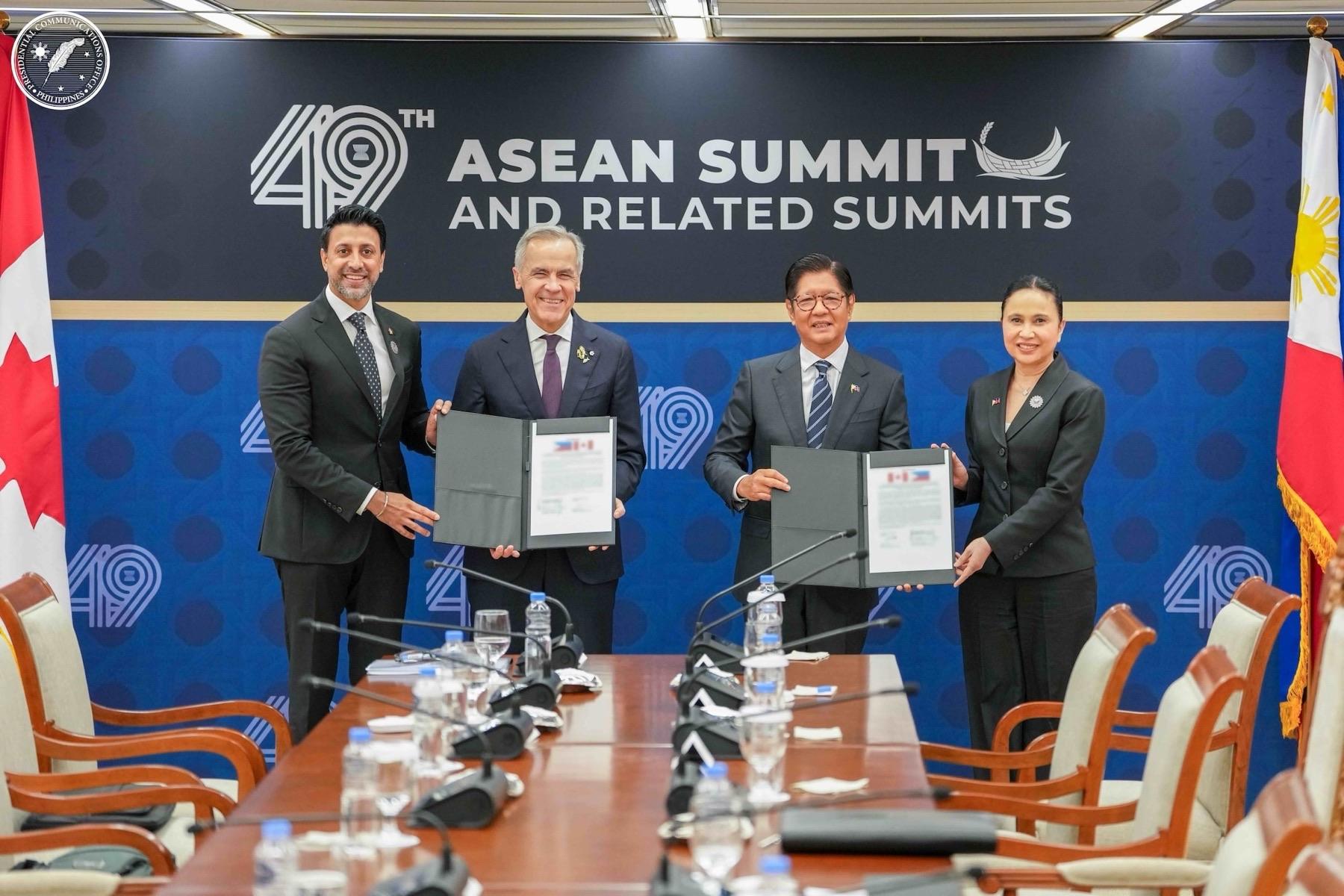
Canadian Prime Minister Mark Carney and Philippine President Ferdinand Marcos Jr. put two trade headlines on the table in Manila on Saturday. The wording matters.
Canada and the Philippines announced the conclusion of negotiations for a bilateral free trade agreement. Philippine Trade Secretary Cristina Aldeguer-Roque and Canadian Minister of International Trade Maninder Sidhu signed a joint statement saying so, with the leaders looking on. Both governments now aim to sign in 2027.
Carney also announced the substantial conclusion of talks toward an ASEAN–Canada free trade agreement, often called ACAFTA. ASEAN—the Association of Southeast Asian Nations—is an eleven-member regional bloc that was Canada’s fifth-largest merchandise trading partner in 2025. Substantial conclusion means most of the bargaining is done. It does not mean the text is locked for signature. Ottawa still has remaining steps, with the same 2027 signing ambition.
One negotiation is closed. The other still has work left. A Canadian exporter or importer should treat them as different files from the first email.
Nothing changes on Monday’s entry
Neither announcement puts a new preferential rate on a customs entry. There is no published entry-into-force date for the Philippines deal or for ACAFTA. The path ahead is signature next year, then domestic ratification, then implementation notices. Until those land, most-favoured-nation treatment still governs.
Ottawa says two-way merchandise trade with the Philippines reached $3.4 billion in 2025, and that once the bilateral pact is in force Canadian exports could rise as much as threefold by 2035, especially in agriculture and forest products. Those are government projections. They are not a tariff schedule a broker can file. Carney told reporters the Philippines deal would cover more than 90 percent of tariff lines and stretch from agriculture to aerospace and artificial intelligence. He did not publish the line-by-line list.
On ASEAN, Ottawa puts 2025 two-way merchandise trade at $52.5 billion and says a finished ACAFTA could add nearly $2 billion to Canadian GDP and about 14,000 Canadian jobs once in force. Again, that is modeled upside after the agreement starts—not a number for this week’s bill of lading.
Saturday also brought memorandums of understanding on ocean technology, drones, and renewable power, plus separate partnership funding. Keep them in the relationship file. They do not open a preferential rate.
What to prepare while the text is still closed
Start with the calendar split. Put Canada–Philippines in one folder and ASEAN–Canada in another. Signature, legal scrub, ratification, and entry into force will not move together. A date that lands for Manila will not automatically open Jakarta, Bangkok, or Hanoi.
Leave preferential numbers out of firm quotes for now. Until tariff schedules are published and an entry-into-force notice exists, price the most-favoured-nation path you can defend. If a buyer wants a glimpse of the upside, show it as a dated alternate, not a binding landed cost.
While you wait, pre-map Harmonized System lines. For Philippine-bound goods, write down the Canadian export codes you use today and the Philippine import lines your buyer’s broker expects. Do the same, country by country, for other ASEAN destinations you already ship to. When schedules appear, you should be checking a short list rather than hunting through the whole catalog.
Rules of origin matter as much as the duty column. Preferential treatment usually needs originating goods and a claim the importer can file. When the text comes out, look for product-specific rules, how a declaration of origin works, and whether a stop in a third country breaks the chain.
Watch the public clocks: Global Affairs Canada and the Trade Commissioner Service on the Canadian side; the Philippine Department of Trade and Industry on the bilateral; ASEAN and Canadian notices for ACAFTA. Signature marks a political close. Entry into force is what changes the rate.
The next year is for paperwork, not new prices
Carney told reporters in Manila the Philippines deal was about six months from signing. Use that as a working horizon. Legal review and translation can still slip, and ASEAN’s remaining steps can take longer than a bilateral close.
If you already sell into Indonesia under the Canada–Indonesia Comprehensive Economic Partnership Agreement that takes effect December 1, keep that preference on its own sheet. A Philippine rate and an ASEAN-wide rate will be different instruments even when they sit on the same regional map.
Spend the wait on files you will need either way: clean commercial invoices, lot-level origin records for agri and forest products, and a broker conversation in Manila about which HS lines they plan to declare. When the schedules finally appear, the work should be matching lines to your shipment—not rebuilding the supply chain from scratch.
Saturday closed one negotiation and nearly closed another. The preferential price still waits for published text, signature, ratification, and a real start date.
Related stories

Canada’s Indonesia Trade Deal Starts Dec. 1. What to Check Before You Quote
Walk one Canadian product through Indonesia’s tariff schedule, origin rules, and importer handoff, then price a sample container with the assumptions written out.
8 min · Nov 11, 2026
The U.S. and China Held Their First Board of Trade Meeting. What Can Importers Act On?
Friday confirmed the Board is meeting. It did not change entry rates. Map your HTSUS lines, keep paying current duties, and watch for the implementing notice.
7 min · Nov 13, 2026

Import Volumes Are Easing. Do Small Shippers Get Any Rate Leverage?
Volume is coming off the peak. Two forwarder quotes for the same Asia–West Coast box still split on scope and fine print.
7 min · Nov 11, 2026
Philippine Startup Week Opens Monday. Who Is Actually Meeting the Founders?
Philippine Startup Week opens Monday in Quezon City. The useful map is Gobi, Foxmont, and Kickstart on the Investors’ Stage, plus Tuesday’s IGNITE X judges and Japan MOUs.
7 min · Nov 6, 2026
Related global reads
Transpacific Bound
Canada’s Indonesia Trade Deal Starts Dec. 1. What to Check Before You Quote
Transpacific Bound
The U.S. and China Held Their First Board of Trade Meeting. What Can Importers Act On?
My Gold Scene
Vancouver city guide
At the Banquet
The Banquet guide to Singapore
At the Banquet
What a decade of Michelin Singapore actually measures