
U.S. Moves to End Grace Period for Laid-Off H-1B Workers
A Sept. 11 proposal would scrap the 60-day cushion after job loss for H-1B and related visas. Consular filings already plunged. More of the work is landing in India and Singapore.

The Department of Homeland Security published a proposed rule on September 11 that would eliminate the discretionary 60-day grace period for laid-off workers on H-1B and several related visas. Comments are due November 10. The change would not take effect until DHS issues a final rule with an implementation date.
Under current regulations, dating to 2016 and in force since early 2017, workers in E-1, E-2, E-3, H-1B, H-1B1, L-1, O-1, and TN status, and their dependents, can remain in the United States for up to 60 days after employment ends without being treated as out of status. The clock is the shorter of those 60 days or the remaining I-94 validity, once per petition period. DHS already has discretion to shorten or refuse the period; Fragomen, the immigration law firm, says refusals have become more common in recent months.
The NPRM would delete that provision. DHS argues the grace period severs lawful status from the job that justified the visa and that removing it would cut administrative burden. If finalized as written, workers whose jobs end before their authorized stay expires would be expected to leave immediately unless they have another lawful basis to stay. Fragomen notes that DHS also acknowledges a higher risk of Notices to Appear, the first step in removal proceedings, especially in categories where employers must report terminations quickly.
The proposal is not law yet. Anyone treating the grace period as already gone is ahead of the Federal Register.
The grace-period fight arrives after a year in which a separate $100,000 H-1B payment scrambled Asia-to-U.S. recruiting.
A September 2025 presidential proclamation tried to attach that charge to certain new petitions, especially those requiring consular processing from abroad. A federal judge in Boston vacated the implementing guidance in June, finding the fee functioned as a tax Congress had not authorized. On July 24, the First Circuit denied the government’s request to keep collecting while it appeals. USCIS says it will comply for now. The White House has extended the underlying proclamation toward September 2027, but immigration lawyers quoted in U.S. and Indian coverage still treat collection as blocked unless the courts reverse. A separate DHS proposal for a $103,265 fee, broader than the consular-only design, is moving on a parallel track. Fee policy remains contested.
The market did not wait for a final court order. USCIS data cited by The Financial Express show initial consular Form I-129 H-1B petitions fell 91.2 percent from September 21, 2025 through May 24, 2026 versus the same stretch a year earlier. Those are filings for workers outside the United States. Outsourcing-heavy sponsors such as Infosys, TCS, Cognizant, and HCL saw registrations drop by the thousands. Microsoft and Amazon, with larger domestic change-of-status pipelines, declined less. FY2027 cap registrations still filled the 85,000 slots, but the applicant pool shrank 38.5 percent, to 211,600 from 343,981. India still accounts for roughly seven in ten approved H-1B beneficiaries in recent USCIS years; China is a distant second near twelve percent.
When bringing a worker from Bangalore or Hyderabad into the U.S. gets expensive or legally foggy, the project rarely dies. It moves.
Public filings and campus announcements already show the substitute geography. About 174 Fortune Global 500 companies operate global capability centers in India, according to 2025 industry tallies covered by The Hindu BusinessLine and trade press, with hundreds of thousands of roles concentrated in Bengaluru and Hyderabad. Forrester analysts, quoted in 2025 trade coverage, argued that a six-figure H-1B petition fee pushes marginal hires into those centers. Ending the grace period would tighten the same calculus: a U.S. layoff that triggers an immediate exit is a liability managers can avoid by putting the team on a local employment contract offshore.
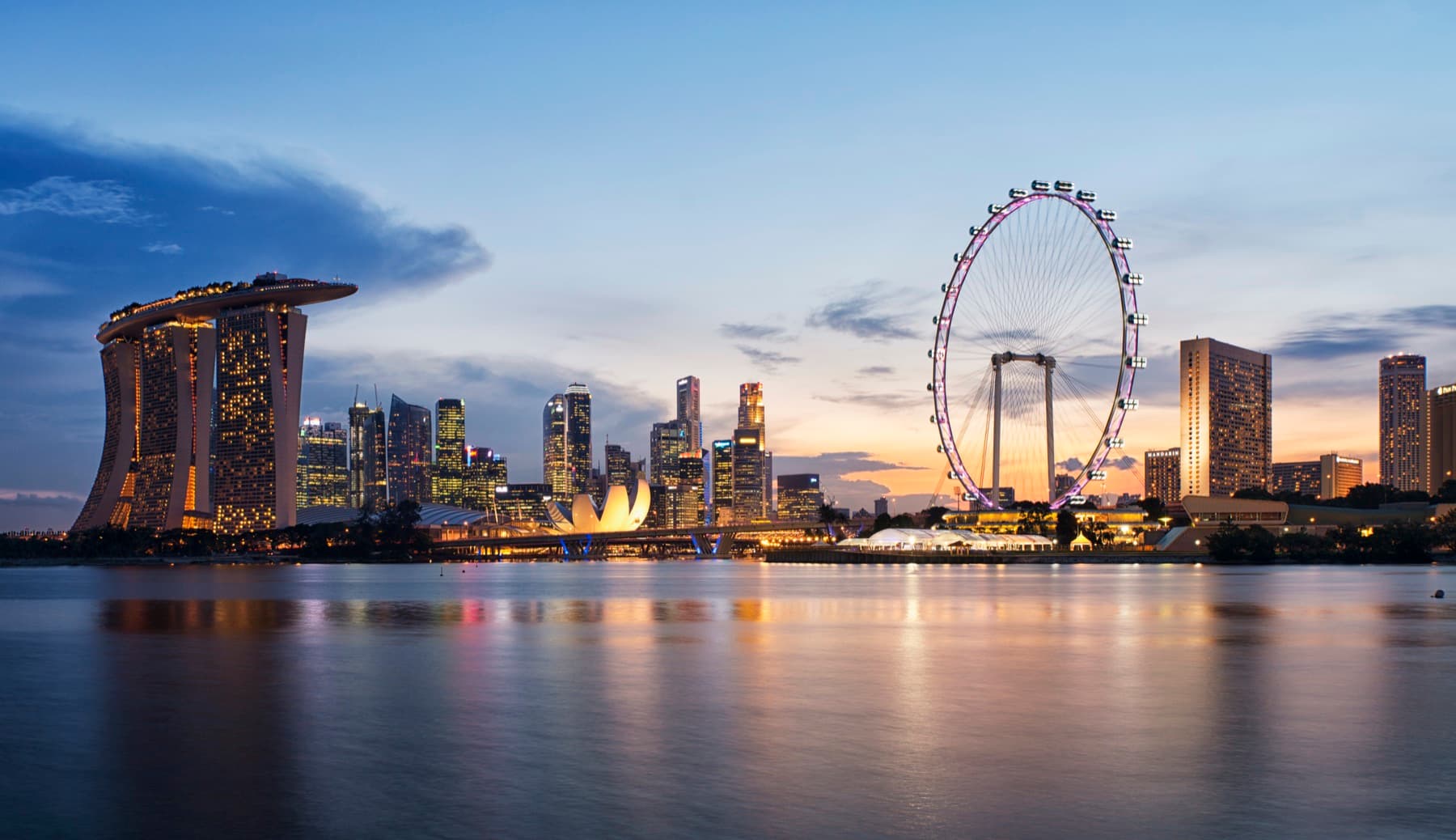
Singapore is absorbing part of the reverse flow for English-speaking professionals. The Employment Pass, administered by the Ministry of Manpower, is the main professional work authorization. Qualifying salaries start around S$5,600 a month in many sectors and rise with age. Applicants also need a COMPASS score that weighs pay, credentials, and how the hire fits the local workforce; shortage-list roles can earn bonus points. Japan’s Highly Skilled Professional points system and standard work visas are the other serious Pacific option for Americans and third-country staff who want Asia as a base instead of a temporary U.S. assignment.
Neither route is a casual relocation. Both look more predictable than building a household plan around a contested U.S. fee and a grace period that may not outlast the comment window.
For sponsors, the near-term work is inventory: which roles still require a U.S. badge, which can sit in an India capability center or a Singapore entity, and how termination notices interact with petition files if the grace period disappears. For holders of H-1B, L-1, or related status, the grace period remains available until a final rule says otherwise; counsel should still walk through what happens the day a job ends.
Companies that will feel the change can file comments on Docket USCIS-2026-0364. DHS specifically invited evidence of reliance on the current rule.
Watch November 10, then the effective date on any final rule. That is when status after a layoff actually changes on this corridor.
Related stories

Offshoring Is Not a Secret Anymore: What Fortune 500 Companies Actually Built Overseas
174 Fortune Global 500 firms run centers in India alone. The debate is no longer whether offshoring happens: it is what kind you are building.
8 min · Jun 9, 2026
Singapore’s July 2024 EOR Clarification Closed a Work-Pass Shortcut
The rule targets foreign staff based in Singapore through an EOR while working for an overseas company with no local presence.
5 min · Jul 16, 2026

HBM4 Leaves the MOU Stage This Month
Hot Chips confirmed 12-layer HBM4 mass production. Company guidance points to a second-half volume push. KB Securities says Samsung and SK inventories are below ten days. Here is what that means for the Korea–Bay Area corridor.
6 min · Sep 9, 2026
China’s New Five-Year Entry Ban Makes Visa “Shortcuts” a Much Bigger Risk
China’s new exit-entry rules let officers bar travelers for years over a false file. Here’s what the text does, and a check before anyone files.
7 min · Aug 8, 2026
Related global reads
Transpacific Bound
Offshoring Is Not a Secret Anymore: What Fortune 500 Companies Actually Built Overseas
Transpacific Bound
Singapore’s July 2024 EOR Clarification Closed a Work-Pass Shortcut
East Table
Japan food consumption tax cut
Medalist News
How Japanese football became a Europe export
Asian Sports
Ohtani to lead Japan’s WBC title defense