
U.S. Visa Rules Are Tightening Just as Asian Travel Demand Accelerates
Permanent visitor-visa bonds, fixed student stays, and tougher screening hit Asia–U.S. trips while India and other markets still generate huge latent demand—and rivals with simpler entry rules stand ready.
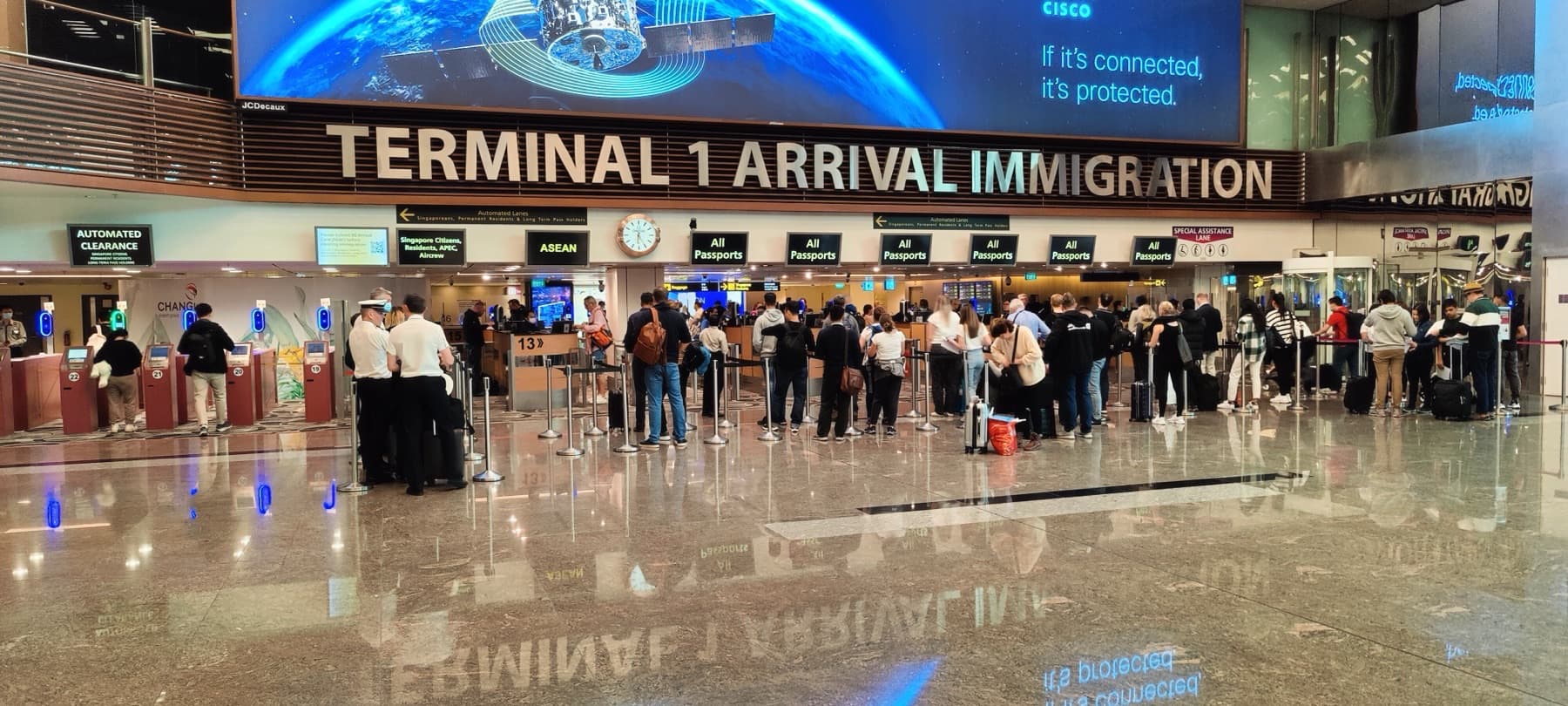
What just changed
Two federal moves define the late-summer 2026 map for Asia–U.S. travel. On August 3, the State Department made permanent a visitor-visa bond program that began as a 2025 pilot. Consular officers can require nationals of designated countries applying for B-1/B-2 business or tourist visas to post a refundable bond of $10,000, $15,000, or $20,000 before a visa can be issued. Most bonds under the pilot sat at $15,000. Compliance generally means arriving and leaving by commercial air; land and sea ports are out. The Department itself reported that B-1/B-2 issuances from pilot countries fell about 83 percent, and that nearly half of applicants told to post a bond simply walked away.
A second clock starts September 15. A Department of Homeland Security final rule ends “duration of status” for F academic students, J exchange visitors, and I foreign-media representatives. New admissions will carry fixed dates on the I-94: for F and J travelers, up to the program length but no more than four years at a stretch, with shorter grace periods than before. I media admissions are generally capped at 240 days, and some passport holders from the People’s Republic of China face a 90-day ceiling. Longer programs will need formal extensions of stay—more paperwork for universities, exchange sponsors, and newsrooms that once relied on open-ended status.
Around those hard rules sits a thicker screening climate that Travel Daily Media has tracked through 2026: tougher interview protocols, social-media vetting, and industry warnings that denial risk is rising even for travelers who are not on the bond list. The bond and student rules are the clearest statutes. The interview room is where many Asia-based applicants will feel the rest.
Who in Asia is affected
The bond list is not a map of Asia’s biggest tourism markets. Of roughly fifty countries covered when the rule locked in, a dozen are in Asia and the Pacific, including Bangladesh, Cambodia, Nepal, Mongolia, Kyrgyzstan, Tajikistan, Turkmenistan, Papua New Guinea, Fiji, Tonga, Tuvalu, and Vanuatu, according to The Diplomat’s reading of the designation. India, China, Japan, South Korea, Singapore, and other high-volume sources are not on that roster—and that distinction matters. A traveler from Tokyo or Seoul does not suddenly owe a $15,000 deposit. A traveler from Dhaka or Phnom Penh may face one at the interview window.
Everyone else still lives with the ordinary machinery of U.S. visas: the nonrefundable application fee, appointment calendars that can stretch for months, and case-by-case judgments about ties and intent. India shows the scale of that baseline pressure. The U.S. Mission there issued more than one million nonimmigrant visas in fiscal 2024 for a second straight year, including a record volume of visitor visas, and more than two million Indians visited the United States in the first eleven months of 2024. Student and exchange travelers across Asia will meet the September 15 admission caps regardless of nationality. Business visitors from bond-listed countries face the new cash hurdle on top of the old interview.
In short: the bond targets a specific set of passports; the student rule and broader screening reach much farther.
Where the travel friction shows up
Friction rarely arrives as a single refused stamp. It shows up as a calendar that will not move, a bond letter that freezes a middle-class itinerary, or a student who cannot finish a five-year program without an extension filing. Under the pilot, the State Department counted more than 45,000 overstays from the eventual bond countries in fiscal 2024, then fewer than fifty in the first ten months of bonding—while also acknowledging that demand for those visas collapsed. Fewer overstays can mean better compliance. It can also mean fewer people came.
For Asian travelers planning U.S. trips in 2026 and 2027, the practical sequence gets longer. Confirm whether your nationality is on the live bond list at travel.state.gov before you buy nonrefundable hotels. Budget months, not weeks, for first-time B-1/B-2 interviews at busy posts. Treat World Cup or conference dates as fixed points that require an earlier visa start, not a reason to assume an emergency appointment. Universities and exchange sponsors should inventory who will hit a four-year wall after September 15 and who needs an extension strategy before OPT or program changes.
Travel Daily Media’s coverage of inbound soft patches—hotel operators fretting about Asian and Middle Eastern World Cup demand, analysts citing WTTC scenarios of multi-billion-dollar visitor-spend risk when access tightens—matches what gateway cities already hear from tour operators: interest remains, conversion is harder.
What U.S. destinations stand to lose
The United States still wants Asian visitors. NTTO’s spring 2026 forecast still assumes overall international growth, partly on the back of the FIFA World Cup, with China projected up about 3.5 percent and India down about 4.1 percent for the year. The near-term scoreboard is cooler. Preliminary NTTO figures put Indian arrivals down 11.3 percent in the first half of 2026, even as India remained the second-largest overseas source market after the United Kingdom. Asia as a region was down about 5.8 percent over the same stretch. Skift and other trade outlets have described a broader inbound slump—visitors down roughly 5.5 percent in 2025—after years when Indian and other Asian traffic was a bright spot.
That is the competitiveness problem. California tech corridors, Florida theme parks, New York shopping streets, university towns, and medical centers all lean on Asian tourism, VFR travel, students, and short business trips. When bonds, waits, and uncertainty rise, the lost unit is often a high-spend household that simply picks another long-haul destination. Brand USA marketing and airline capacity cannot fix a consular bottleneck. Gateway hotels already told Travel Daily Media that international booking from key football markets was lagging expectations; visa anxiety was part of the explanation.
U.S. cities do not lose Asia overnight. They lose the easy yes—the trip booked because the visa felt routine.
Who benefits across Asia and Europe
Trip demand does not evaporate when one border gets harder. It reroutes. European destinations with clear Schengen processes, the United Kingdom for travelers who can secure entry, and Gulf hubs that combine air links with relatively straightforward visit rules are the obvious substitutes for a postponed New York or California week. Inside Asia, places that already compete for the same affluent Indian, Chinese, Korean, and Southeast Asian outbound dollars—Japan, Korea, Singapore, Thailand, the UAE—gain when the U.S. feels administratively heavy.
Airlines and hotels notice the same pivot. A family that once split summer between a U.S. campus visit and a West Coast loop may keep the campus if the student visa holds and replace the leisure leg with Europe or Japan. A regional sales team that used to add a Las Vegas conference onto a California customer tour may cut the conference when the B-1 timeline slips. Starlux, Cathay, and other Asia-based carriers still sell transpacific seats; they also sell Asia–Europe and intra-Asia alternatives that do not depend on a U.S. consular calendar.
Those markets win on process. They are easier to enter while Washington uses price and paperwork as immigration tools.
What travelers and companies should do now
Start with the list and the date. If your passport is among the bond countries, assume a five-figure refundable deposit may be required and that commercial-air compliance will matter. If it is not, still assume longer interviews and fuller document files than two years ago. Students and exchange visitors should read their I-20 or DS-2019 against the September 15 fixed-stay rule and talk to their international-student office before booking multi-year plans that ignore extension risk. Companies scheduling U.S. offsites for Asia-based staff should pick dates only after visa appointments exist—not the reverse.
Keep a backup destination that does not need a U.S. visa. Keep receipts and travel history organized; consular officers still weigh ties and intent. Recheck travel.state.gov and your local U.S. embassy page the week before you pay the fee, because country designations on the bond program can change with fifteen days’ notice.
Asia’s appetite for American trips did not disappear in 2026. The paperwork required to turn that appetite into a boarding pass got heavier. For travelers, that means earlier applications and flexible tickets. For U.S. destinations, the risk is quieter: watching high-intent Asian demand choose the itinerary that clears immigration more predictably.
Related stories
Flying to Asia for Work? How to Turn a Business Trip Into a Smarter Extended Stay
Split the calendar, pay the incremental personal costs, pick a hub that rewards two free days, and protect the flight home from becoming a second jet-lag week.
7 min · Aug 4, 2026

Asia’s Airports Want to Be Your First Destination
Book the connection like a city stop. Jewel’s landside campus and Incheon’s airport-island resorts are competing for your first hours in Asia.
4 min · Aug 3, 2026

Cathay Pacific Just Posted Its Best First-Half Profit Since 2010. What Does That Mean for Transpacific Travelers?
More Hong Kong connections and metal are coming. Fuel costs and firm premium demand still argue against treating this earnings print as a clearance sale on Business Class.
5 min · Aug 5, 2026
AI Planned My Asia Trip. Here’s What Still Breaks.
Chatbots will sketch Seoul or Taipei in seconds. Entry rules, last trains, and closed Mondays still need a human check before you treat the itinerary as a ticket.
4 min · Aug 3, 2026