
Okinawa’s Shuri Castle Main Hall Reopens After Seven Years
The reconstructed Seiden opened to visitors yesterday in Naha, seven years after the 2019 fire. Timed Webket reservations cover the interior at the usual park fee; the north and south halls are still being rebuilt.
What reopened yesterday
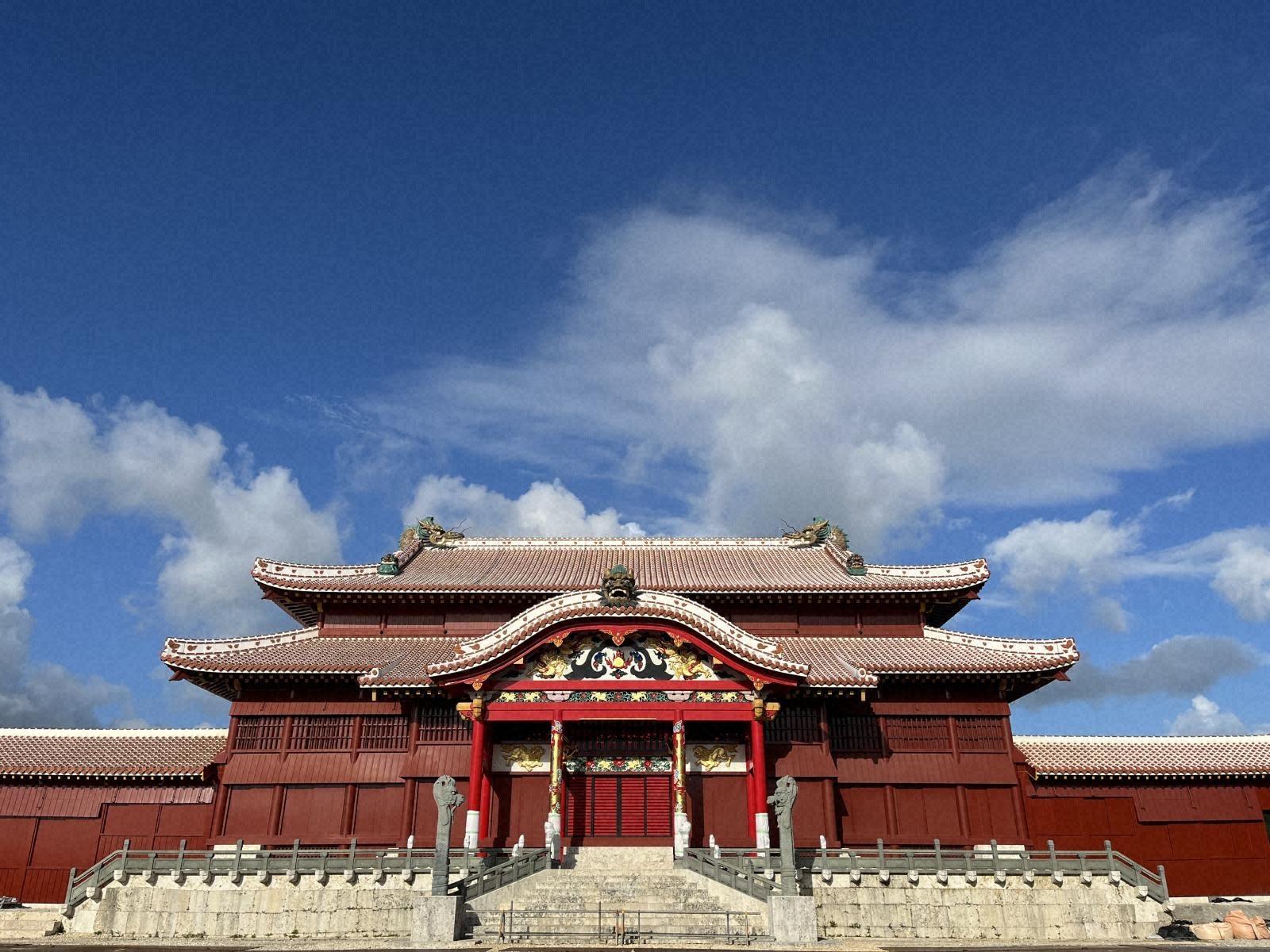
At noon on November 23, Japan’s Labor Thanksgiving Day, Shurijo Castle Park in Naha opened the Seiden—the main hall of Shuri Castle—to the public for the first time since a fire on October 31, 2019. Opening-day interior slots sold out. Travelers without a reservation could still buy a paid-area ticket, walk the courtyard, and see the vermilion exterior.
The hall that burned was a 1992 reconstruction, along with several neighboring palace buildings. The limestone gusuku walls and archaeological remains that underpin the UNESCO listing survived. The new Seiden draws on research done since that earlier rebuild, with updated tile patterns, carving, lacquer, and fire protection.
The building has three stories. Visitors see the first and second floors, where the Usasuka thrones sit—the rooms where Ryukyu kings once held court and ceremony. According to media previews in The Japan Times and on NHK, the upper floor carries golden dragon pillars and black lacquer railings; the first-floor throne has embroidered dragon hangings and colored beads; and a large wall tablet now uses a yellow ground and sculpted dragons in place of the 1992 scheme. That interior is what the timed ticket is for.
What is still under construction
The main hall is open, but the palace around it is still a worksite.
Park notices and opening-day reports from FNN and NHK say the North Hall (Hokuden), the South Hall (Nanden), and other buildings around the Una courtyard remain under reconstruction. Any completion years you see for those wings are planning targets, not ticket dates.
Scaffolding or empty footprints may still mark where the flanking halls belong. The park has asked visitors to watch the rebuild as work continues. If you have only one morning in Naha, take the Seiden slot and walk the gusuku stone walls. Come back when the side halls reopen if you want the courtyard to feel complete again.
How to book the interior
Two paid-area tickets are on sale. Only one includes the Seiden interior.
For the hall, buy “Admission Ticket (With Seiden Interior Reservation)” through Webket, the park’s online seller. Choose a date and a thirty-minute window. The timed slot costs nothing extra. Adults pay ¥1,000, about US$6.30 at a late-November rate near ¥159 to the dollar; high-school tickets are ¥760; elementary and junior-high are ¥370. Children under six enter free. Okinawa residents seventy and older, and disability-certificate holders, also enter free, but they still need an interior reservation unless the visitor is a preschooler. Show the QR code at Hoshinmon and join the Seiden line in your window.
The second ticket is paid-area admission without an interior reservation. It covers the courtyard and the Seiden exterior, with no time slot. If same-day interior spaces open up, you can buy them online or at the Kofukumon window up to fifteen minutes before the window starts.
November and December inventory sold in two rounds, on September 1 and October 1 at 1:00 p.m. Japan time. From January 2027, each month’s dates go on sale at 1:00 p.m. on the first of the month two months earlier—so February tickets open December 1. Groups cannot pre-book the interior from November 23 through December 6. Opening day was sold out; later November dates have been scarce in places. If you care about the interior, buy the timed ticket before you book the hotel.
Give yourself ninety minutes to two hours from the Suimuikan visitor area. Shuri Station on the Yui Rail is the easy approach; parking was closed on opening day and is a poor bet on busy holidays. On ordinary days, Seiden slots start from the 8:30 a.m. hour. Check live hours on the park site before you pin a morning departure.
Why Shuri feels different from mainland castles
Most mainland castle days are about feudal keeps—Himeji’s white towers, Osaka’s moated fortress. Shuri was the capital of the Ryukyu Kingdom.
From the fifteenth century until annexation into Japan in 1879, Ryukyu ran a maritime court that traded with China, Korea, Southeast Asia, and the Japanese islands. The Seiden’s vermilion paint, dragon motifs, and throne rooms grew out of that diplomacy. The limestone gusuku walls that wrap the hill are a Ryukyuan fortification form, closer to coral-stone ramparts than to a mainland tenshu keep. UNESCO inscribed the wider “Gusuku Sites and Related Properties of the Kingdom of Ryukyu” in 2000 for that kingdom history. The wooden halls you enter are reconstructions. Much of what the listing protects is the archaeology and the hilltop itself.
A stop in Naha is kingdom history reached by monorail through a working neighborhood, rebuilt after wartime loss and again after 2019. Add another gusuku or a museum hour if you want more context. On this trip, expect an open main hall and an unfinished courtyard.
If November and December are sold out
Watch the December 1 release for February 2027, then the first of each month after that. Plan the Naha overnight around the slot you hold. Arrive early for the free zones and stone gates, or use a paid-area ticket for the exterior if the interior is gone that day.
Reserve the Seiden when you can, ride the monorail to Shuri Station, and treat the unfinished north and south halls as the next chapter of the rebuild—not as a reason to skip the visit.
Related stories
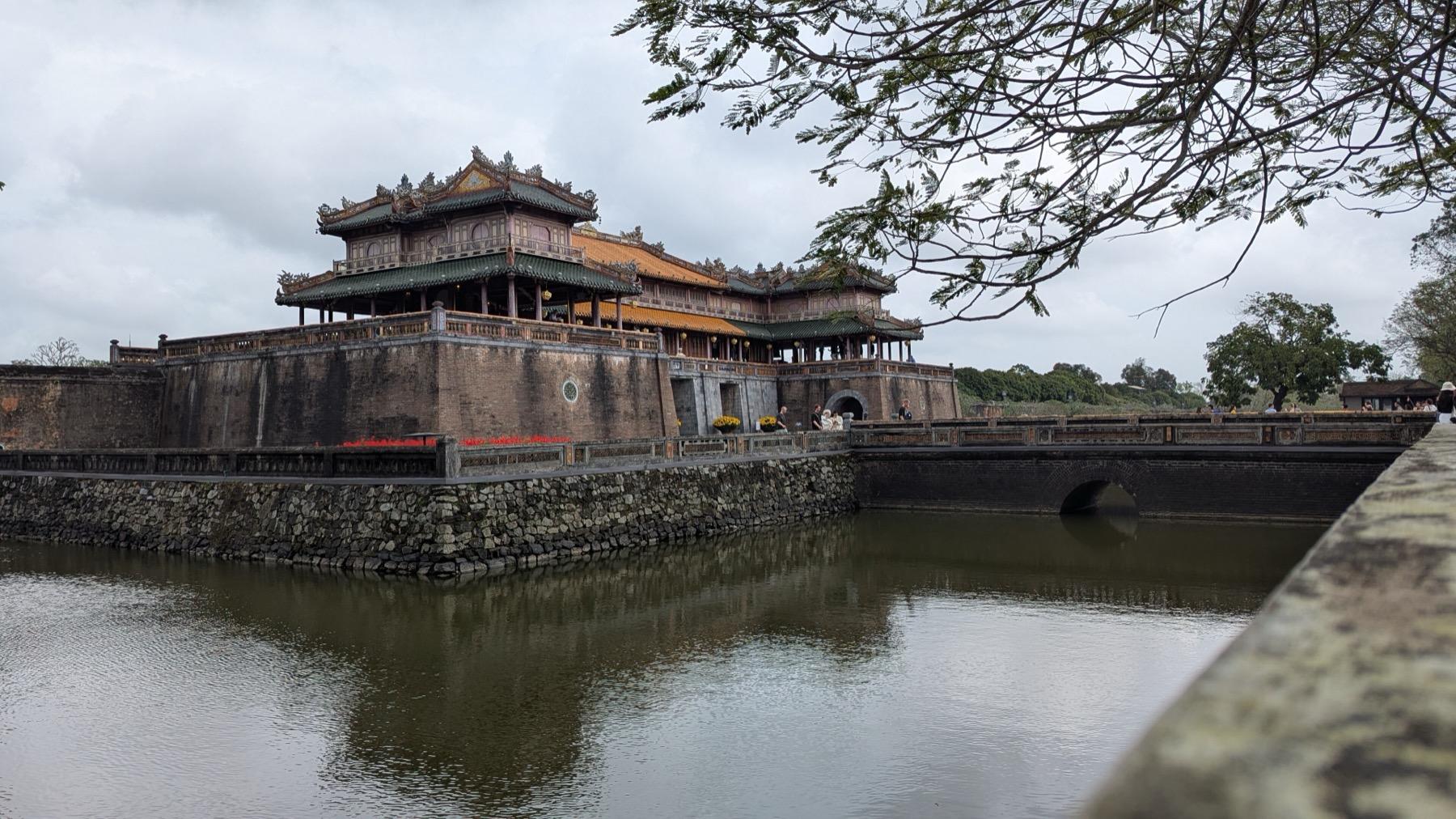
A Train Ticket Can Cut the Cost of Visiting Five Huế Heritage Sites in Half
Ride the Huế–Đà Nẵng or Huế–Phong Nha heritage train, keep the ticket, and spend the single half-price admission on Đại Nội. Tombs and the museum sit on the same eligible list.
7 min · Nov 20, 2026
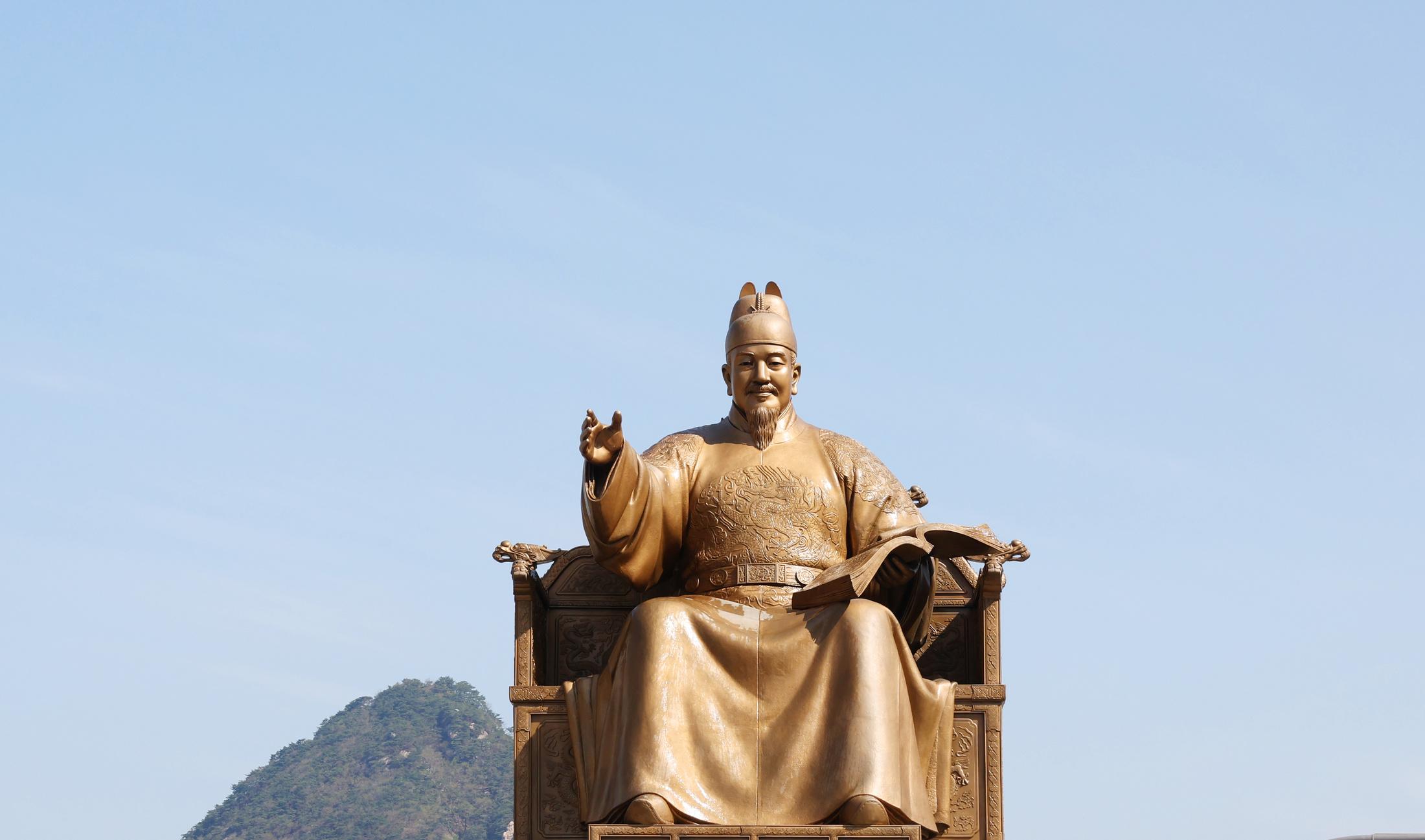
The Hangeul Museum Is Closed. This Seoul Exhibition Is Where to Go Instead.
The National Hangeul Museum stays shut into late 2028. The free centenary show is on Sejong-daero through Feb. 9, 2027. Start there if you still remember the Ichon-side building.
6 min · Nov 18, 2026
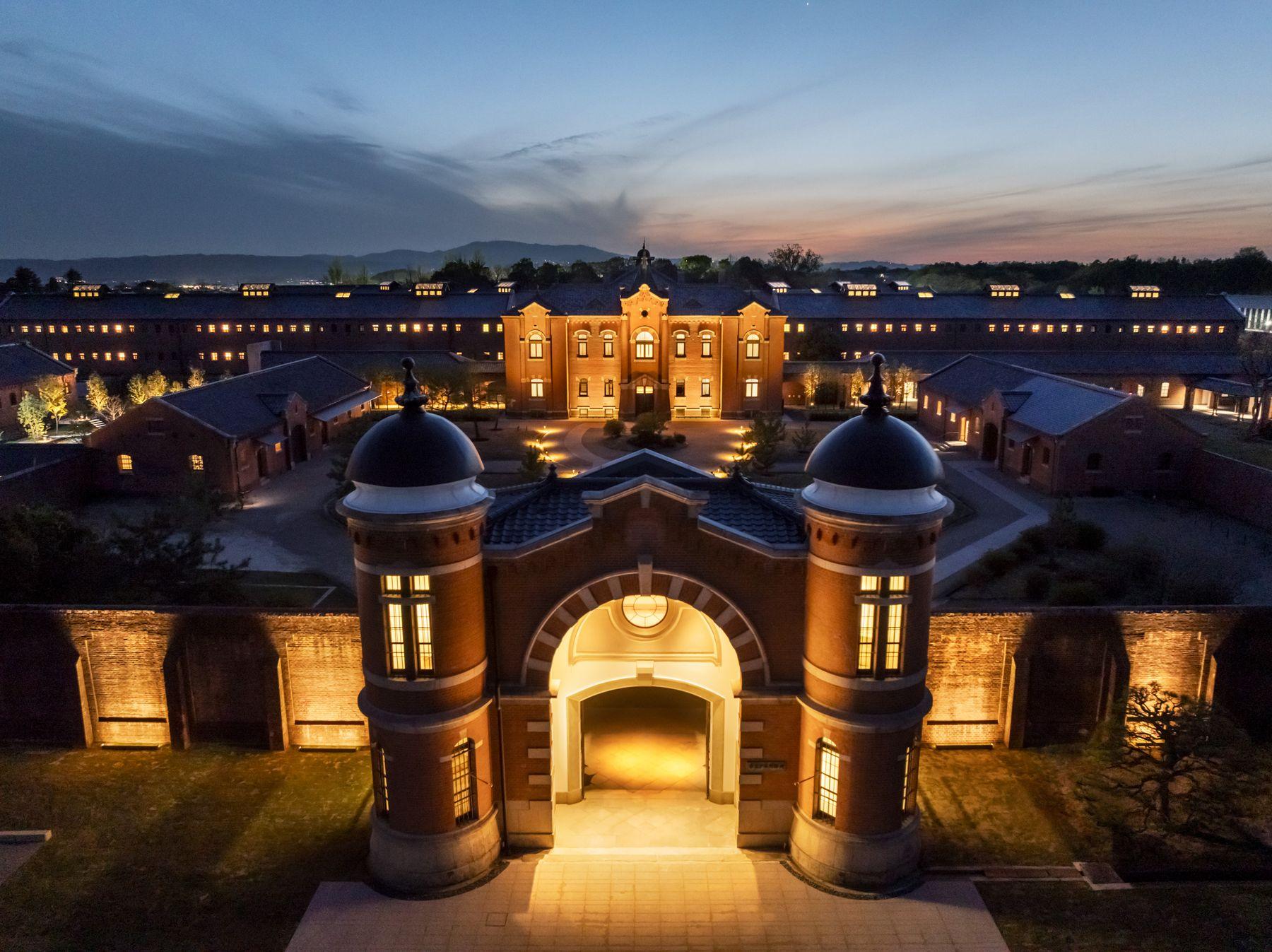
Inside the 118-Year-Old Japanese Prison Reborn as a Luxury Hotel
HOSHINOYA Nara Prison opened June 25 inside a Meiji-era Important Cultural Property: how cells became suites, what the museum holds, and how the stay argues for sleeping in Nara instead of day-tripping from Kyoto or Osaka.
7 min · Aug 6, 2026
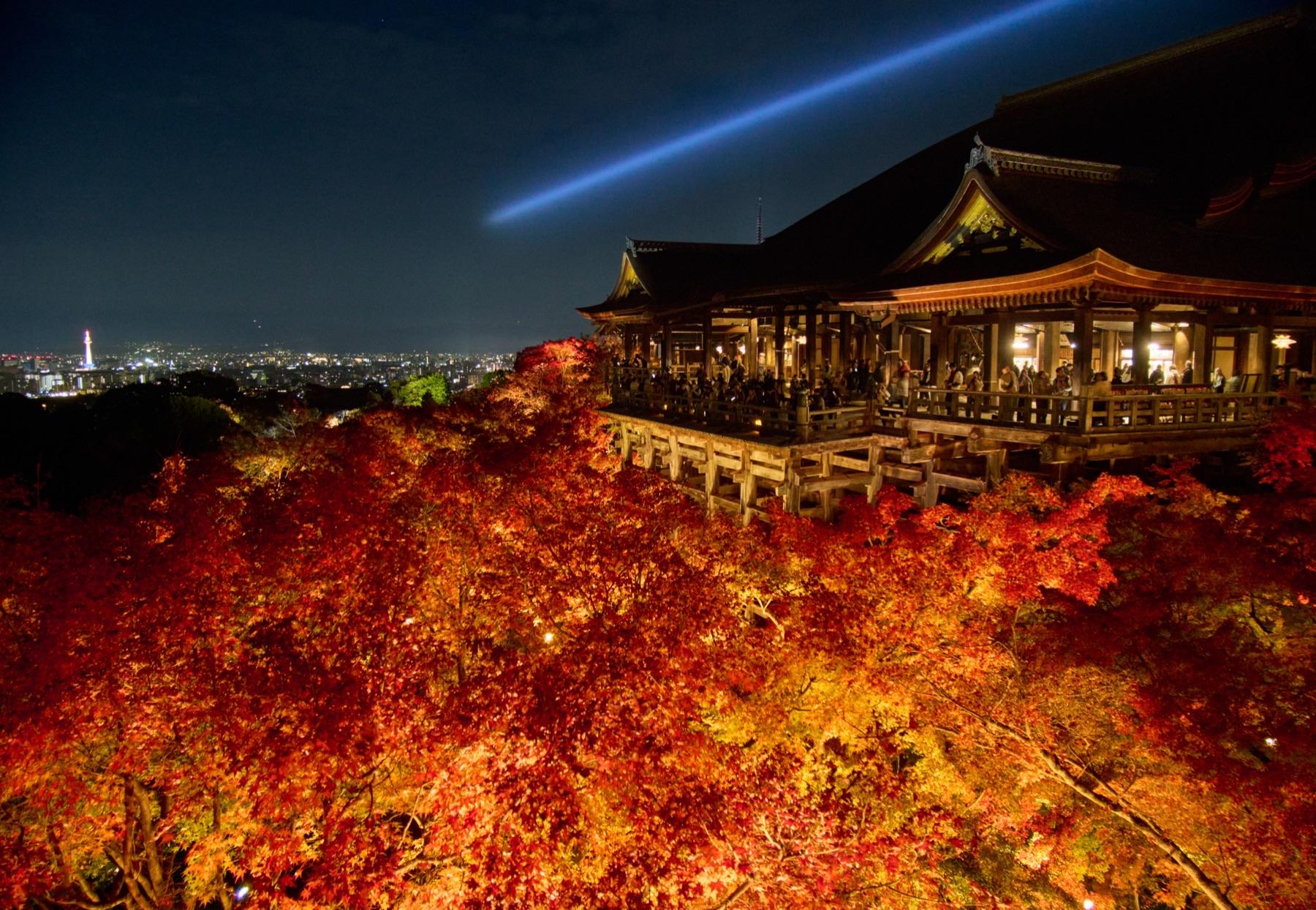
Kyoto’s Kiyomizu-dera Night Visits Run November 21–30. Plan the Evening Around Them.
Kiyomizu-dera lights up November 21–30. Get in by 9, see Jojuin before 8:30 if you want the garden, and settle dinner before you start climbing.
7 min · Nov 9, 2026
Related global reads
Transpacific Bound
A Train Ticket Can Cut the Cost of Visiting Five Huế Heritage Sites in Half
Transpacific Bound
The Hangeul Museum Is Closed. This Seoul Exhibition Is Where to Go Instead.
Goldsea
How much I really spent in Japan
Goldsea
What I loved doing in Japan
My Gold Scene
Japanese dramas streaming in North America (2026)