
L.A. Moved Another Million TEUs. The Rail Leg Is Still Slow
October was a Port of Los Angeles record above one million TEUs. Today’s tentative watchmen deal eases strike risk at six terminals. Rail dwell still sets inland delivery time, and that figure did not move with the labor news.
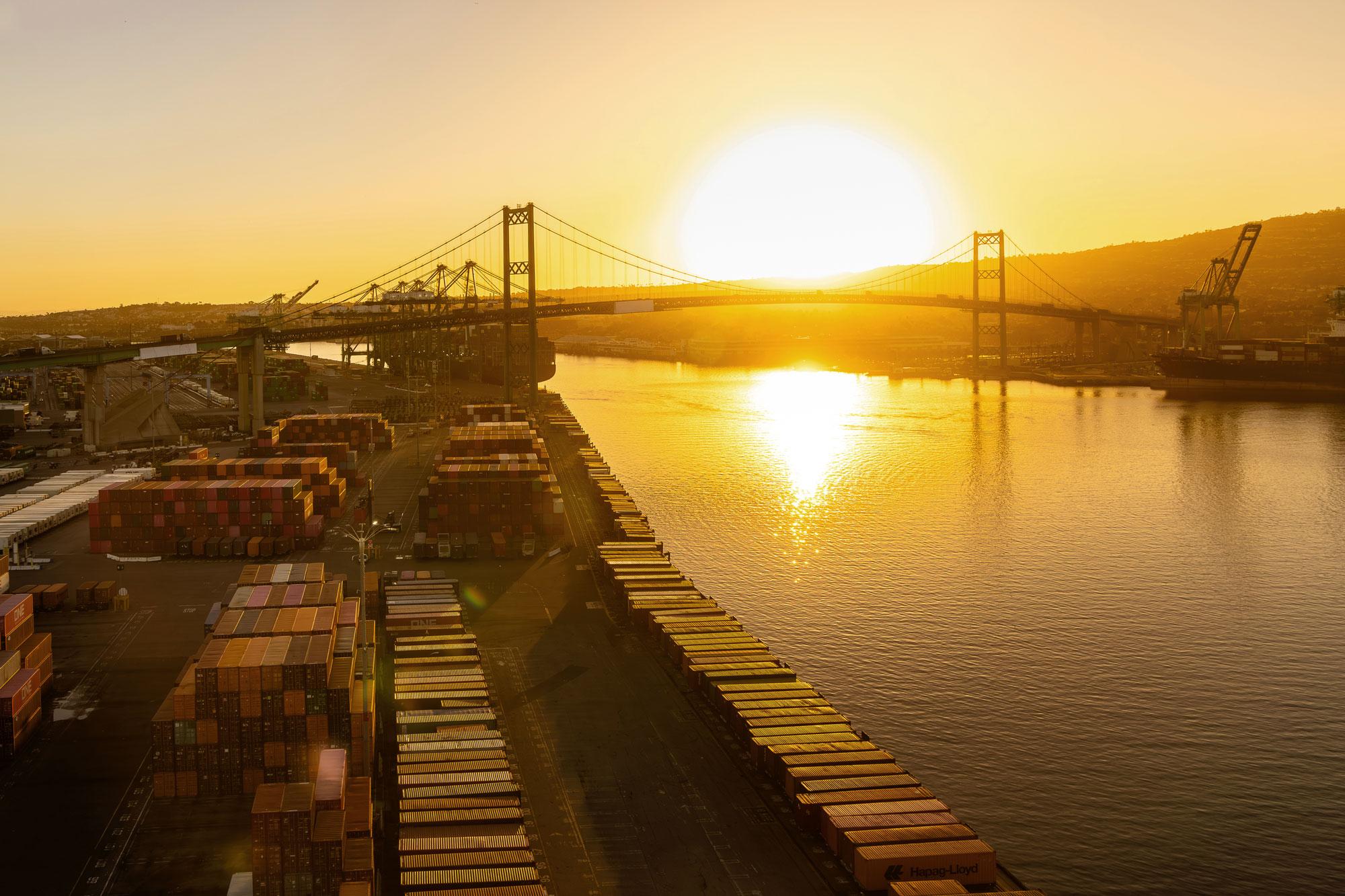
What October’s million TEUs actually count
The Port of Los Angeles handled 1,026,872 twenty-foot equivalent units in October, according to the port’s November 12 release. That is a record for the month and the second-highest monthly total in the port’s history, behind only September’s 1,042,652 TEUs. It is the first time Los Angeles has cleared more than a million TEUs in consecutive months, and the third time in 2026 the port has crossed that line. Port officials say no other U.S. gateway has posted a one-million-TEU month.
A TEU is a twenty-foot container slot. A typical forty-foot box counts as two. So October is another full million of those units across the docks, stacked on September’s peak. From June through October the port moved nearly five million TEUs, its strongest five-month stretch on record. Loaded imports ran about 538,620 TEUs, up 25 percent from October 2025 and about 30 percent above the port’s five-year October average. Loaded exports were 114,981 TEUs, down 7 percent year over year. Empties hit 373,271 TEUs, a second straight monthly record as carriers sent equipment back to Asia.
Gene Seroka, the port’s executive director, tied the surge to consumer spending, retailers restocking, trade-policy shifts, and trouble on other global routes. Through the first ten months of 2026, Los Angeles is at about 9.11 million TEUs, roughly 5 percent ahead of last year. That tells an importer the boxes are still choosing San Pedro Bay in volume. It leaves open when a rail-bound box actually leaves the terminal for Chicago, Dallas, or Atlanta.
Terminal volume is not inland delivery
The TEU total is what crossed the quay. Inland performance shows up in dwell: how many days a loaded import sits on the marine terminal before it leaves by local truck or by rail.
The Pacific Merchant Shipping Association, which represents West Coast marine terminals and carriers, publishes a monthly weighted average for Los Angeles and Long Beach together. For October, local truck dwell averaged 3.60 days, up from 3.18 in September and the highest truck reading in the past two years. Rail dwell averaged 8.16 days, up from 7.19 in September, the second-highest monthly rail figure in that same window after 9.86 days in October 2024. Natasha Villa, PMSA’s senior manager of public affairs, said the rise tracks the volume moving through the country’s busiest intermodal gateway, with rail still under the most strain.
Late October inventory told the same story. FreightWaves, compiling the ports’ daily rail reports for October 26, counted about 35,700 import containers waiting for on-dock trains across the complex. More than 10,500 of them had already sat nine days or longer. Los Angeles carried a heavier share of those long waits than Long Beach. C.H. Robinson’s October drayage update pointed to Southern California intermodal railcar shortages as a reason import dwell was stretching, while truck-destined boxes moved closer to normal. BNSF Railway and Union Pacific Railroad haul that inland traffic. How fast a stack train clears depends on equipment and westbound car supply, which the TEU press release does not measure.
If the purchase order is local Southern California truck delivery, October’s dock story is mostly good news with a modest dwell bump. If the box is interior-point intermodal, plan from the rail column.
What today’s watchmen deal settles
On November 21 the Pacific Maritime Association, the employer group for West Coast stevedoring companies, said it had reached a tentative contract with International Longshore and Warehouse Union Local 26 covering about 250 watchmen at Los Angeles and Long Beach. The deal needs ratification by Local 26 members. The current contract is extended while that vote proceeds. PMA thanked the Federal Mediation and Conciliation Service and the U.S. Department of Labor for their help.
Those watchmen are about 2 percent of the ILWU workforce at the two ports, by PMA’s count. They handle security at six container terminals: checking credentials at gates, walking patrols, and flagging safety issues. In a November 18 statement, before the weekend deal, PMA said those terminals move roughly 85 percent of Long Beach’s cargo and about a third of Los Angeles’s, and warned that other ILWU crafts could honor a watchmen picket line. The prior extension was set to expire at 12:01 a.m. Saturday, November 21. A strike authorization was already on the books. The coastwide longshore contract that runs through 2028 is a separate agreement. Saturday’s paper covers only Local 26.
The tentative deal lowers the odds of an immediate walkout and picket line while members vote. Cargo owners get a clearer weekend than the one employers were describing on Wednesday. The November 21 statement does not include a wage schedule or a ratification date. Earlier employer proposals floating bonuses and salary ranges were bargaining positions, so treat them as offers, not final terms. The labor note also leaves railcar supply and October’s 8.16-day average rail dwell untouched.
What importers should still watch on the rail side
Ask your forwarder or beneficial cargo owner team whether the box is local truck, near-dock, or on-dock rail to an inland ramp. Price time against the October dwell split. An eight-day average with a nine-day-plus tail is a real input for holiday inventory and factory bookings that still have to clear Southern California.
Watch the equipment language from the railroads and your ocean carrier: railcar allocations, chassis at the inland ramp, and empty repositioning that competes with loaded moves. Carrier advisories through the peak already pointed importers toward Northwest gateways, all-water East or Gulf Coast strings, and transload or over-the-road options when an interior-point intermodal dwell is too long. Those swaps cost money. They are still how you move a delivery date when the dock is fluid and the rail queue is not.
On labor, put Local 26 ratification on the calendar. The coastwide longshore deal runs through 2028 unless something new appears. A 250-person security unit is not a waterfront-wide stoppage, and a tentative peace is not a rail fluidity program.
Los Angeles can still clear another million TEUs in a month. Today’s agreement makes a watchmen strike at the busiest terminals less likely this weekend. For inland cargo, the next useful checks are whether rail dwell comes down from 8.16 days and whether the Local 26 vote sticks. Until both move, keep the buffer on the rail leg.
Related stories
A U.S. Tax Threat Just Entered the Budget for Overseas Data Centers
Trump said he would tax U.S. firms that build data centers overseas, and admitted he had not briefed his staff first. No rate or bill exists yet. Owned Asian campuses sit closest to the words he used.
7 min · Nov 20, 2026
Indonesia Promised to Buy More U.S. Soy. How Much Actually Shipped?
Through September, U.S. soybean shipments to Indonesia sat at 54% of the annual target. Wheat was under 25%, soymeal about 4%. Shipment tallies measure cargo that moved, not a volume promise at a signing ceremony.
7 min · Nov 20, 2026
The U.S. and China Held Their First Board of Trade Meeting. What Can Importers Act On?
Friday confirmed the Board is meeting. It did not change entry rates. Map your HTSUS lines, keep paying current duties, and watch for the implementing notice.
7 min · Nov 13, 2026

Import Volumes Are Easing. Do Small Shippers Get Any Rate Leverage?
Volume is coming off the peak. Two forwarder quotes for the same Asia–West Coast box still split on scope and fine print.
7 min · Nov 11, 2026
Related global reads
Transpacific Bound
A U.S. Tax Threat Just Entered the Budget for Overseas Data Centers
Transpacific Bound
Indonesia Promised to Buy More U.S. Soy. How Much Actually Shipped?
East Table
Japan food consumption tax cut
Medalist News
How Japanese football became a Europe export
Asian Sports
Ohtani to lead Japan’s WBC title defense