
Qualcomm Renewed Deals With Apple and Huawei. Its Next Growth Bet Goes Beyond Phones.
November 4 results locked long-term licensing with Apple, Huawei, and Transsion at an unchanged royalty run rate—then pointed the growth story at cars already shipping and Amazon data-center revenue just starting to land.
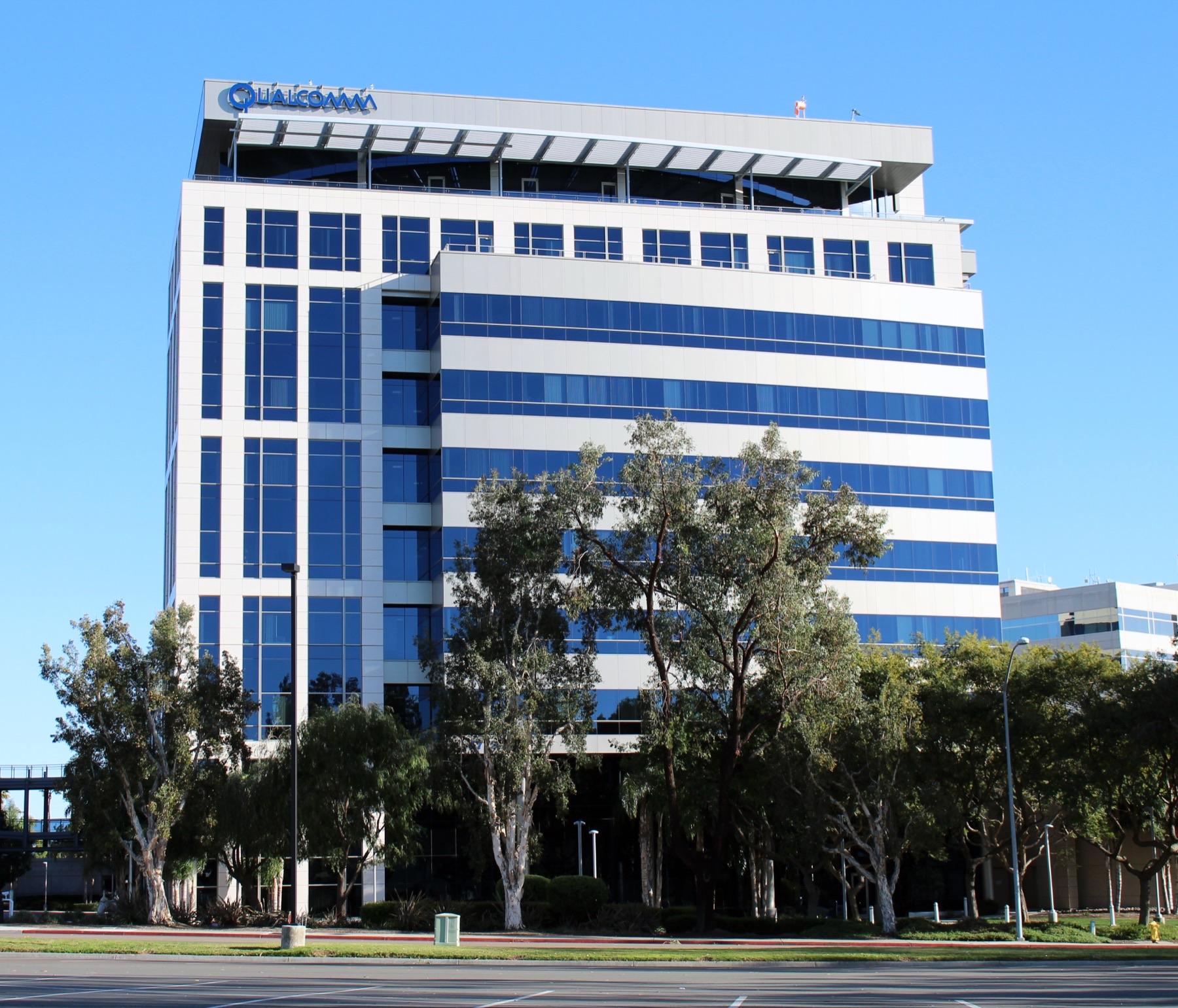
What November 4 actually settled
Qualcomm reported fiscal fourth-quarter non-GAAP revenue of $10.4 billion and non-GAAP earnings of $2.17 a share on November 4—both near or above the Street on the print, then a stock that slid about 7 percent after hours on a softer outlook. Handset chip sales inside Qualcomm Technologies’ QCT unit fell 26 percent year over year to $5.1 billion as memory costs squeezed the global smartphone market. Licensing at QTL, the patent arm housed at Qualcomm Incorporated, came in at $1.3 billion.
CEO Cristiano Amon told investors the company had closed several uncertainties that had hung over the year: QTL license renewals, the loss of Apple as a modem customer, and the trough in China Android demand. The useful read for a Transpacific desk is not that phones vanished. It is that the phone relationship split in two. Royalties to keep Asian and U.S. handsets legal under Qualcomm’s patents are one business. Selling the Snapdragon silicon inside those phones is another—and Apple’s modem transition is already in the chip plan as a ramp-down, not a surprise.
The royalty bridge to Asian handsets is renewed. The growth math is cars you can already count and data-center targets you still have to believe.
Apple and Huawei on the license, not the same chip story
Qualcomm announced long-term licensing renewals with Apple, Huawei, and Transsion—the Shenzhen-based group behind Tecno, Infinix, and itel that has become a volume force across emerging markets. Management said the QTL revenue run rate is unchanged after the deals, and that the next major renewal cycle does not begin until fiscal 2030 and runs through 2033. CFO Akash Palkhiwala added that Qualcomm now has no upcoming license renewals with major handset OEMs for the next several years. That is arriving cash-flow stability, not a new growth spike.
The Asia link is structural. Huawei remains a Chinese smartphone and telecom heavyweight that still needs cellular IP clarity to sell devices where it can. Transsion’s growth is Africa- and emerging-market Android volume. Apple’s iPhones still ship by the hundreds of millions with Asian assembly even as Cupertino designs more modem silicon in-house. Renewing those three licenses keeps a San Diego patent portfolio paid by the handset industry’s most important brands without requiring every one of them to buy Qualcomm’s modem chips.
Do not confuse the Apple license with Apple modem silicon. Amon said the timing of the Apple modem transition is fully incorporated. First-quarter fiscal 2027 handset guidance still expects Android gains to be offset by a continued decline in Apple product revenue. The royalty check can keep clearing while the chip invoice shrinks.
Automotive is the growth line already on the books
If the question is which “beyond phones” revenue has already arrived, start with cars. QCT automotive posted its first $2 billion quarter—$1.99 billion, up 89 percent from a year earlier. For the full fiscal year, automotive revenue reached $6.0 billion, up 52 percent. Qualcomm says it exited fiscal 2026 at an approximately $8 billion annualized run rate, a billion dollars ahead of the $7 billion expectation it had floated a quarter earlier.
Commercial shipments of the fifth-generation Snapdragon Digital Chassis began in the September quarter and are still ramping. Management’s pitch is that content per vehicle is rising as the company moves from system-on-chips toward integrated compute modules, and that Qualcomm wants to sit among the largest automotive semiconductor suppliers by revenue in fiscal 2027. BMW and Stellantis showed up in the strategic-agreement roll call on the same call. That is design-win language layered on top of revenue that already cleared the income statement—unlike most of the data-center story.
Amazon and the data center: shipping now, targets still ahead
The data-center bet is the one investors priced as future. At the June Investor Day, Qualcomm sketched $5 billion of data-center revenue in fiscal 2027 and more than $15 billion by fiscal 2029 inside a $40 billion non-handset ambition. On November 4 it reiterated the $5 billion fiscal 2027 target, said it expects more than $650 million in the December quarter alone, and guided to exit fiscal 2027 at a $7 billion annualized run rate. Starting this fiscal year, data center becomes its own reported stream inside QCT.
Amazon is the named hyperscale bridge. The multi-generation collaboration announced September 8 covers custom silicon for AI inference and optical connectivity up to 1.6 terabits, with warrants that can vest against as much as $60 billion in potential Amazon purchases over about ten years. Fifteen percent of those warrants—3.75 million of 25 million shares at $161.26—vested on initial purchase commitments. Treat the $60 billion figure as a ceiling tied to purchases, not booked backlog.
What has already started is narrower and more useful. Qualcomm says it is in production with Amazon, that custom accelerators began shipping in October, that AWS connectivity solutions ramp later in November, and that data-center revenue begins in the December quarter. Design-win tallies on the earnings slides list two connectivity customers including Amazon, three custom-silicon or AI-accelerator customers including Amazon, and Meta on the CPU side with Dragonfly C1000 still on schedule. The December-quarter $650 million-plus print is the first real test of whether the forecast is turning into invoices.
How to read the Asian device map from here
Handsets are not gone; they are constrained. Qualcomm assumes global handset units flat to down in calendar 2027. Memory pricing still shrinks the industry’s unit pool even after Qualcomm raised its own product prices. Amon said the June quarter was the low for China Android and that the just-reported quarter showed sequential growth there. Premium Android share is the piece management wants investors to watch as “agentic” on-device AI raises compute content per phone—still a 2027–2028 product story more than a booked one.
For a buyer of the Transpacific chip narrative, November 4 sorts the stack. QTL renewals with Apple, Huawei, and Transsion keep U.S. patent design paid by the handset brands that actually move Asian factories. Automotive is the diversification line with two billion dollars of quarterly proof. Amazon and the wider data-center ramp are the next chapter with October shipments and a December revenue start—against multi-year targets that remain guidance until those invoices stack. Price the royalty bridge as durable. Price the cars as present. Price the data-center billions as a ramp you recheck every quarter.
Related stories

Apple’s Memory Bill Just Hit the Holiday Guide
Apple can absorb some of the AI memory boom in its margin. Shoppers already paid higher stickers. More may follow.
6 min · Nov 3, 2026
Oracle Scrapped the Tencent Chip Lease
The servers were supposed to sit in Southeast Asia. The pressure still landed on a U.S. cloud company.
6 min · Nov 4, 2026

Korean Money in America Just Got a New Watch List
Midterm control of Congress does not erase Korea’s U.S. factories. It changes which extensions, credits, and shipyard rules executives have to track next.
7 min · Nov 5, 2026
SK hynix Stopped Reviewing a Solidigm Listing
There is no Solidigm share to buy. The parent in Seoul still has a factory to pay for.
5 min · Oct 24, 2026