
Riyadh Air Picked Kuala Lumpur, Not Bangkok or Jakarta, as Its First Stop in Southeast Asia
The Saudi carrier’s inaugural Riyadh–Kuala Lumpur flight begins today, the first of four planned Southeast Asia routes, and a bet on business and pilgrimage traffic ahead of bigger tourism markets.
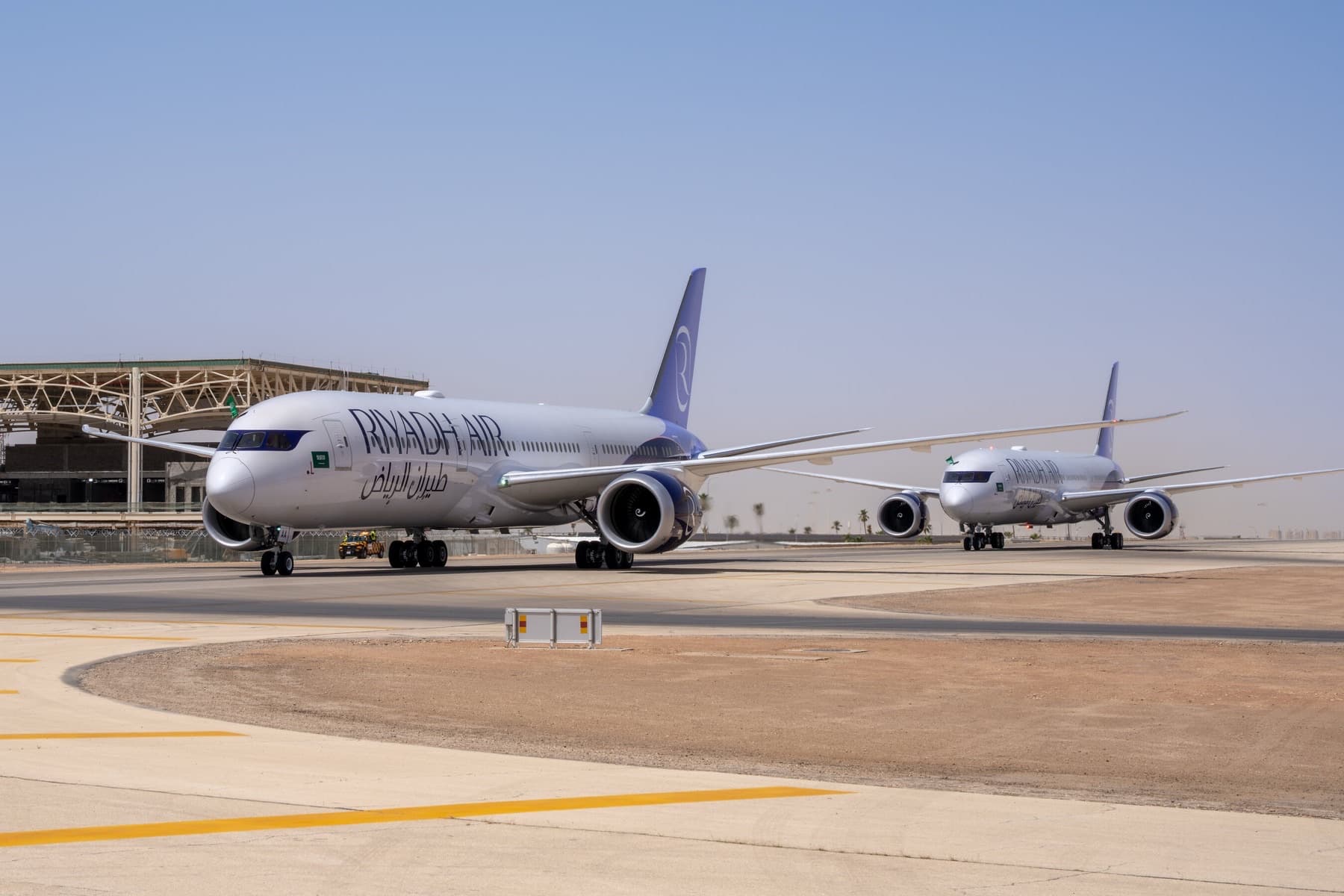
Riyadh Air begins service between Riyadh and Kuala Lumpur today, its first scheduled route into Southeast Asia and one of four the carrier is opening across the region this year alongside Bangkok, Jakarta, and Manila. Flight RX0863 leaves Riyadh at 10:50pm and lands in Kuala Lumpur at 11:50am the next day; the return, RX0864, leaves Kuala Lumpur at 4:45pm and lands back in Riyadh at 7:45pm. Both operate three times a week on a Boeing 787-9, the aircraft the carrier has flown since opening ticket sales to the public on July 1.
That July 1 date matters more than it might look. Riyadh Air is barely a month old as a public-facing airline. The Public Investment Fund-owned carrier was announced in March 2023 and spent nearly two years running invitation-only test flights, including one to Kuala Lumpur in October 2024 that its then-chief operating officer, Peter Bellew, pointed to as evidence the airline was serious about the route: “We wouldn’t be going to Kuala Lumpur for test flight if we didn’t plan to operate direct route there in the future.” Chief executive Tony Douglas now says the fleet will reach eight Boeing 787s by the end of July, on the way to a network covering 22 destinations by March 2027 and more than 100 by 2030.
The choice of Kuala Lumpur as the first Southeast Asian stop, ahead of larger tourism markets like Bangkok or Jakarta, says something about how Riyadh Air is sequencing its growth. In its own launch statement, the airline framed the route around “a deep-rooted partnership between Saudi Arabia and Malaysia spanning over 60 years,” citing business, education, and religious travel, including the Hajj pilgrimage, ahead of leisure tourism as the immediate draw. Malaysia is a hub for Islamic finance and home to a steady flow of students and workers moving between the two countries, a source of traffic less tied to season than beach or temple tourism, even if it is a smaller headline market than Thailand or Indonesia.
The move also fits a wider pattern. Gulf carriers are converging on Southeast Asia at the same time: Qatar Airways and Emirates already serve Kuala Lumpur many times daily, and reporting on Riyadh Air’s 2026 route map describes Saudi Arabia as following the UAE and Qatar into expanded direct connectivity with Bangkok, Jakarta, and Manila as well. Riyadh Air’s three-times-weekly Kuala Lumpur schedule is a modest opening bid against carriers with decades of established alliances and codeshares in the market. Reaching 100-plus destinations by 2030 means competing directly with two of the world’s most entrenched long-haul hub operators, not filling gaps they left open.
For Malaysian travelers, the near-term effect is a new one-stop option to Europe and the Middle East through Riyadh, on an aircraft configuration aimed at premium demand: fully flat beds in Business Elite and Business class, added privacy in Premium Economy, and Panasonic’s Astrova entertainment system with per-seat power across all four cabins. Riyadh Air is also opening its Sfeer loyalty programme to the route, with a best-offer price guarantee and no points-expiry policy, standard tools for a new entrant trying to win share quickly rather than grow it slowly.
What happens next has less to do with Kuala Lumpur specifically than with whether Riyadh Air can keep this pace without thinning service on any one route. Three Boeing 787-9s were covering London and Dubai as of early July; an eighth aircraft is due by month’s end, and Bangkok, Jakarta, and Manila are still to open this year alongside new European routes to Malaga and Madrid. A young carrier expanding this fast usually learns quickly which routes were sequenced correctly and which opened ahead of real demand. Kuala Lumpur was chosen, by the airline’s own account, for steadier traffic rather than a splashy debut. Whether that judgment holds will show up in load factors long before Riyadh Air adds its next Southeast Asian city.
Related stories
Philippine Airlines Returns to Boeing With Up to 20 Dreamliners
PAL’s Farnborough MoU for up to twenty 787-10s will not fly Chicago in 2026, but it signals how the airline plans to modernize after the A350s already on order.
4 min · Jul 20, 2026
Qantas Just Tied Itself to Melbourne’s Next Decade of Gates
More widebody gates, a bigger business lounge by 2029, and room for Jetstar growth: what the Qantas–Melbourne Airport agreement actually changes for travelers.
4 min · Jul 28, 2026

Korea’s Sidewalks Are Crowded for a Reason
KTO’s H1 numbers show China still leading while Taiwan and the US sit far above 2019 baselines. Here’s what that density feels like in Seoul, and why Busan belongs on the map.
4 min · Jul 25, 2026
DHL’s Bangkok–Cincinnati Freighter Maps the New Asia–U.S. Air Cargo Story
A thrice-weekly Bangkok–Cincinnati freighter with up to 100 tons per flight shows how AI and semiconductor hardware are reshaping Asia–U.S. air cargo.
4 min · Jul 9, 2026
Related global reads
Transpacific Bound
Philippine Airlines Returns to Boeing With Up to 20 Dreamliners
Transpacific Bound
Qantas Just Tied Itself to Melbourne’s Next Decade of Gates
At the Banquet
The Banquet guide to Penang
At the Banquet
George Town shophouse grammar for the diaspora household
Goldsea
Tuk tuks and Muay Thai: a Bangkok adventure