
Seoul as a First Trip to Asia: Energy Without the Spreadsheet
Transit, food, and pacing for travelers who want intensity with infrastructure that mostly works.

Opening thesis
First trips to Asia fail when the city and the nervous system mismatch. Seoul is not the softest option on the menu.
Taipei and Singapore forgive faster, but it is one of the best teachers if you want intensity with infrastructure that mostly works.
This guide is for culturally fluent travelers choosing Seoul as a first anchor: diaspora travelers with global taste, patient eaters, and people who can tolerate being slightly behind for forty-eight hours without turning the week into a performance. Seoul punishes checklist energy.
It rewards appetite, transit literacy, and the humility to repeat a district instead of collecting districts.
Read our Seoul destination hub and hype-cycle city guide alongside this piece. This is the first-trip frame; those are the depth layers.
Why Seoul for a first Asia trip
Seoul offers English in core transit, a subway system that scales, late food that is not tourist theater, and a city where eating alone at a counter is ordinary. That combination matters for first-timers building confidence before Tokyo precision or Bangkok volume.
Choose Seoul first if you want energy, skincare-and-food culture, and neighborhoods that change character after dark. Skip it as a first anchor if you need emotional ease above all, heritage weight, family scripts, or nervous-system fragility may fit Taipei better.
There is no moral ranking. Seoul is harder than Taipei for some travelers and easier than Tokyo for others. Match the city to your actual bandwidth, not the version of yourself that looks best in a trip announcement.
Where to stay
Jongno suits travelers who want hanok mornings and palace-adjacent walks without living in a museum. Mapo suits food-first itineraries.
Hongdae and Itaewon suit first-night energy and English-friendly chaos. Gangnam suits efficiency, late retail, and travelers who accept a business-district rhythm.
Pick one hub for the whole week. Seoul is connected enough that hotel hopping feels possible and foolish at the same time, you lose mental energy to checkout lines you could spend on jjigae.
Proximity to a subway line you will use daily beats a boutique address with a pretty lobby photo. Heat and cold both matter; indoor recovery, cafes, jjimjilbang, department stores, is part of Seoul pacing, not a failure of adventure.
Transit and navigation
Buy a T-money card early and treat the subway as the spine. Google Maps works well for routing; it will not teach you escalator side or which car empties fastest at your stop.
Watch one local commute before you assume rush hour rules.
Seoul’s scale rewards geographic clustering: one market morning, one neighborhood lunch, one district at night: not three distant boroughs because a list said so. Taxis and Kakao T help when rain, luggage, or fatigue make transfers cruel.
For family trips, minimize stair-only exits and build elevator awareness into station choices. Diaspora first trips fail when transit becomes the story instead of the meal waiting at the end.
Food rhythm without export tourism
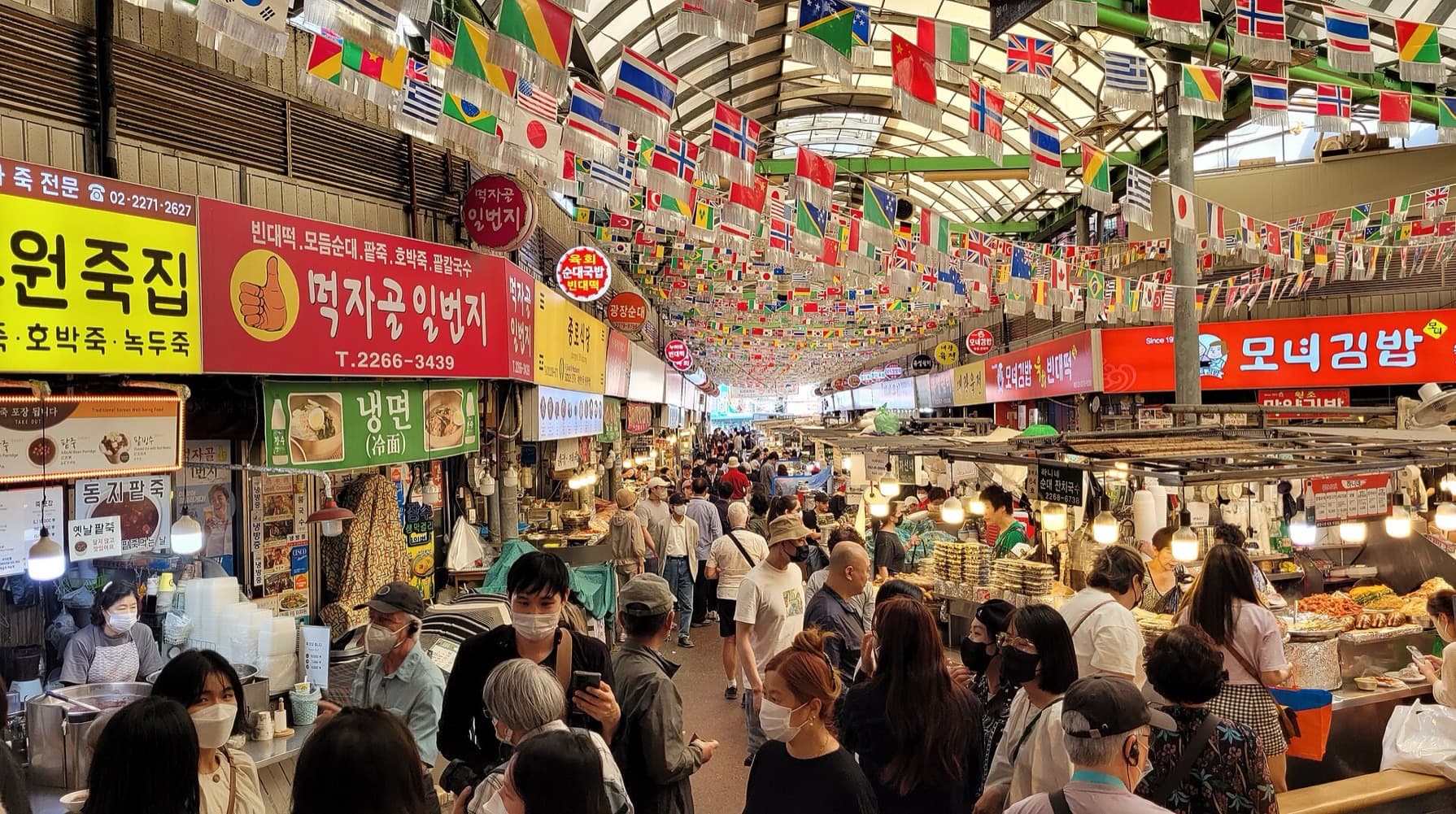
Korean BBQ is not dinner every night. Kalguksu, jjigae, pojangmacha stalls, and bakery cases teach Seoul faster than the export cafe aesthetic alone.
Book one serious meal if you care, barbecue, seafood, or a reservation you earned, but let lunch be spontaneous in the district you are already walking. Convenience store gimbap at midnight is not a consolation prize; it is how the city actually eats when the day runs long.
Do not eat only where English menus are guaranteed. Point, nod, accept the day’s special. Busy lines at neighborhood shops are data. Empty shops at peak dinner hour mean something too.
Korean diaspora expectations
Korean American travelers often arrive with family expectations layered on export culture: the Seoul of skincare ads versus the Seoul relatives describe versus the Seoul you discover on foot. Those versions can coexist without merging in one week.
Give the city its own itinerary, not a reconciliation tour squeezed between cousin errands and cafe queues. Honor one family obligation if needed; protect at least two meals and one half-day you choose entirely.
Language comfort varies. Food nostalgia may not match contemporary flavors. Notice without forcing resolution. Seoul is not waiting to validate your identity. It is busy being itself at 2 a.m.
Five-day pacing
Days one and two: learn one district and one transit line. Day three: market or jjimjilbang recovery built in deliberately.
Day four: repeat what worked at a different hour. Day five: one optional sight if you care, otherwise one last late food run.
One jjimjilbang afternoon is not laziness; it is how locals recover. One market morning teaches portion size and cash habits. One long walk with no destination beats three palaces you will not remember.
Cut the plan in half if traveling with parents. Success is everyone willing to eat again tomorrow: not everyone seeing N Seoul Tower on schedule.
Final note
Leave knowing which district you would return to hungry: not which cafe photographed best or which palace ticket you checked off.
Seoul as a first trip works when you stop trying to keep up with the export version and start learning one neighborhood’s meal times honestly. That skill transfers to Tokyo, Taipei, and every other dense Asian city you touch next.
Book return flights with room for a second district, not a second country.
Related stories
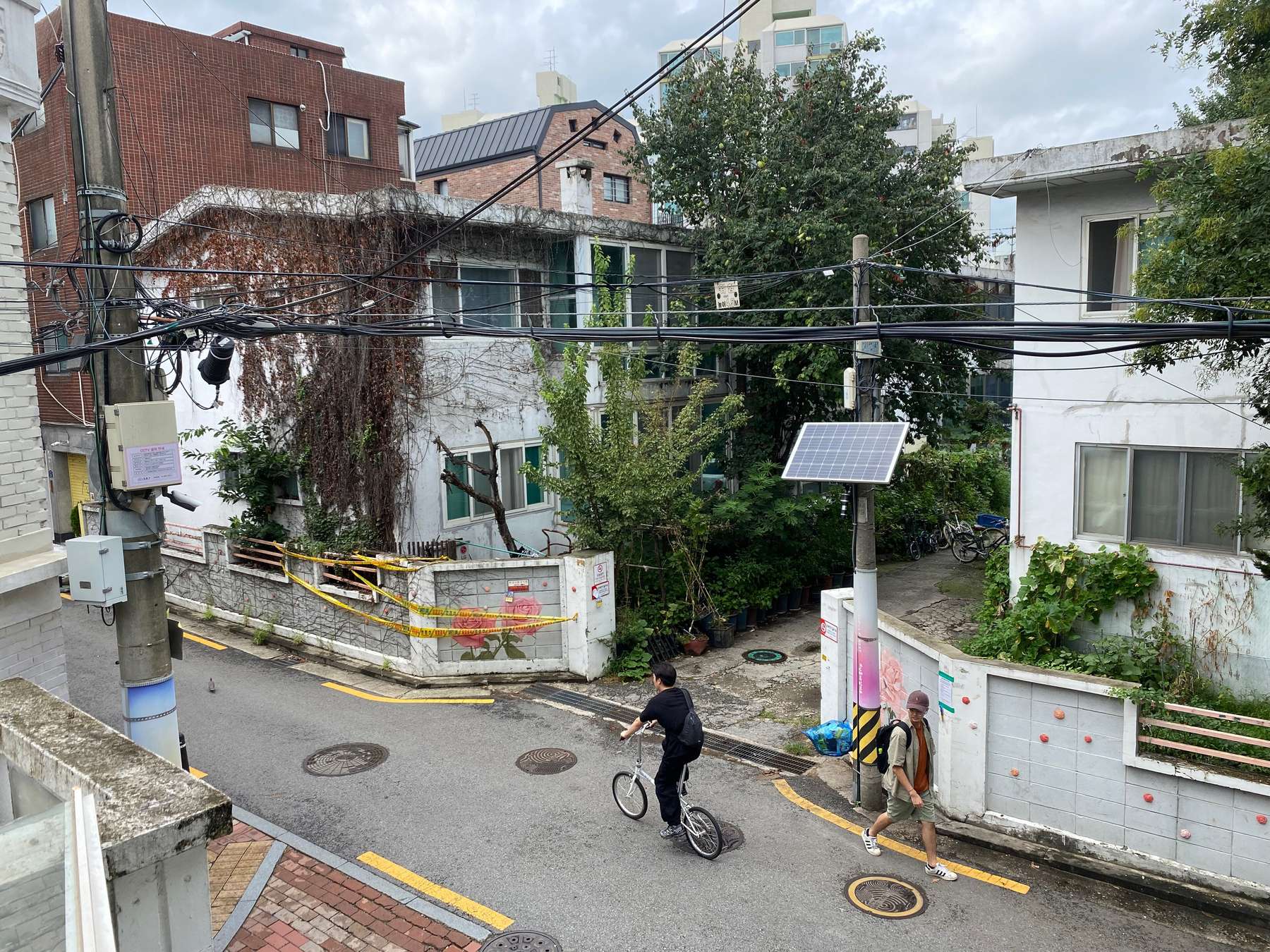
The 48-Hour TikTok Itinerary vs a Real Seoul Weekend
Keep the saves. Cut the hour-stack. One neighborhood base, two café bets, and honest subway time beat a montage labeled forty-eight hours.
4 min · Aug 3, 2026

Seoul After the Hype Cycle
Beyond the export narrative: neighborhoods, markets, and meals that reward travelers who skip the trend checklist.
8 min · May 18, 2026

Your First Trip to Asia: A Culturally Fluent Starter Guide
How to pick your first Asian city, pace the week, and avoid turning the trip into heritage performance or continent tourism.
10 min · May 5, 2026

Taipei Is the Soft Landing More Asian Travelers Should Choose First
Why Taipei teaches you how to travel Asia before harder cities test you.
7 min · May 12, 2026