
AI Chips Are Redrawing Asia’s Air-Cargo Map
Korean Air’s cargo revenue jumped about 46% in Q2 as AI hardware replaced China e-commerce as the growth engine—and carriers from Narita to Taoyuan are rewriting freighter maps around semiconductor hubs.
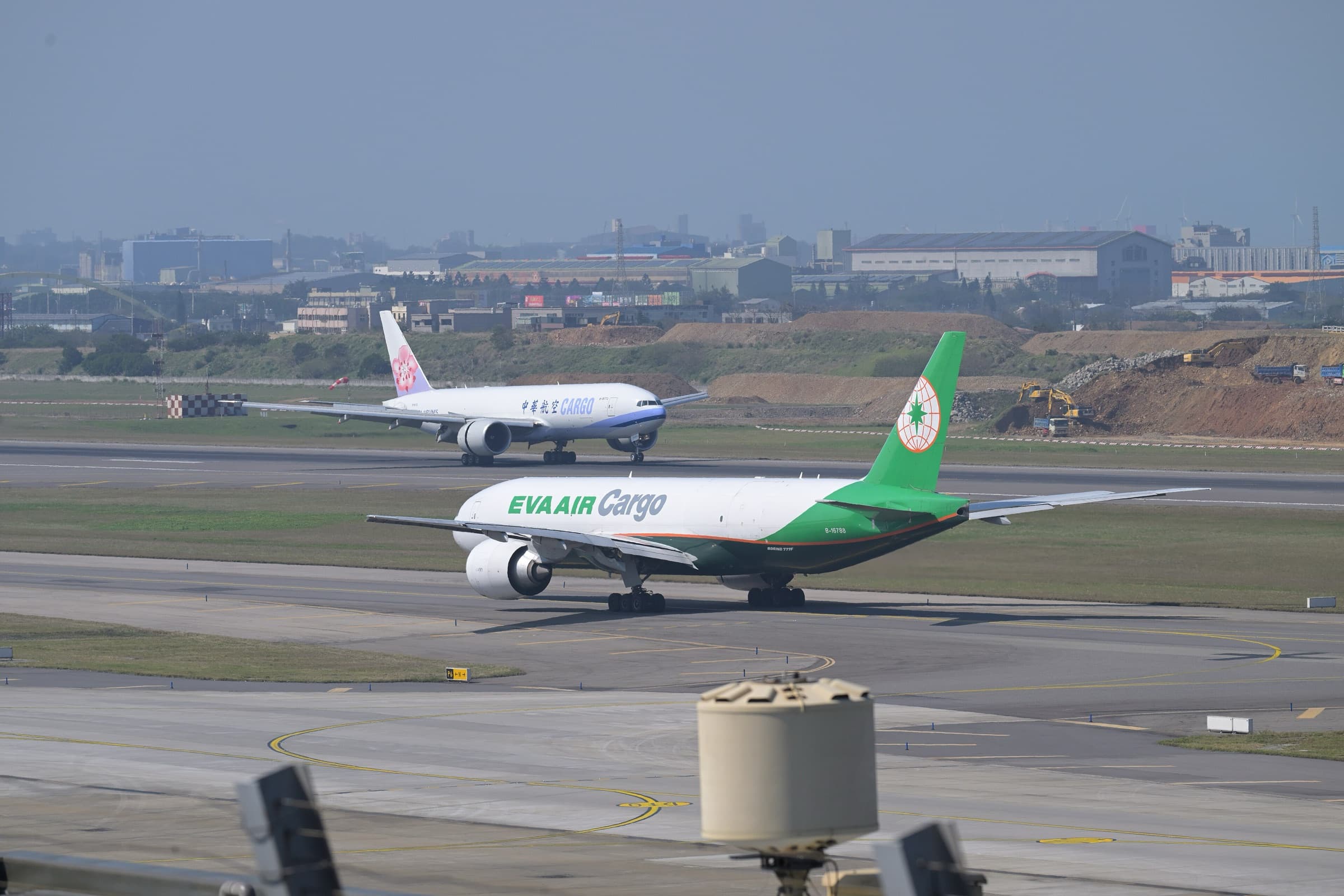
If you already read that Asia-North America freighters are running near a practical full, the July 29 update is the map underneath that ceiling. A Reuters analysis from Hong Kong and Los Angeles found that airlines are redesigning Asian air-cargo networks around semiconductor and AI-server hubs as cross-border e-commerce loses momentum. The growth engine now looks like multi-year memory and processor orders plus data-center buildouts that will pay for air freight, not another short parcel boom.
Korean Air’s second-quarter numbers make the mix change readable. The airline’s July 13 newsroom release put cargo revenue at about 1.54 trillion won for the quarter, up roughly 486.5 billion won from a year earlier, about 46 percent, helped by global AI-related investment and strong K-beauty exports, plus flexible high-value and charter flying. Jaedong Eum, Korean Air’s cargo chief, told Reuters that advanced high-tech cargo has rapidly expanded as a core growth driver, that orders for advanced high-bandwidth memory and processors already stretch two to three years ahead even as demand still exceeds supply, and that the airline expects strong cargo demand through the second half of 2026 as next-generation AI processors and long-term infrastructure commitments keep moving.
E-commerce is not vanishing, but its role has changed. Niall van de Wouw of Xeneta, in the firm’s mid-year outlook as quoted by Reuters, said e-commerce was air freight’s single biggest growth pillar and that this is no longer the case. Reuters' China reporting shows why: low-value and e-commerce exports fell about 7 percent in May, a sixth consecutive monthly decline, after the United States ended duty-free de minimis treatment for low-value China imports and the European Union abolished its own duty-free threshold. ANA Holdings has warned, via Reuters, that the EU move is a downside risk for broader cargo even while semiconductor-related shipments stay strong. On the semiconductor side, treat April’s sales boom carefully: Xeneta suggests sales more than doubled year over year, while the Semiconductor Industry Association’s World Semiconductor Trade Statistics put growth at about 93.9 percent to $110.5 billion. Use the primary sales print rather than mashing the two into one invented number.
The redraw is geographic. Japan supplies semiconductor equipment, South Korea leads in advanced memory, Taiwan holds leading-edge production, and Vietnam, Malaysia, Thailand, and Singapore are rising assembly hubs for AI servers headed to North America and Europe. Singapore Changi’s Lim Ching Kiat told Reuters that freight throughput was up 8.7 percent year over year in the first half on strong global semiconductor demand. At Japan Airlines, technology products accounted for about 80 percent of the increase in air exports from Asia excluding China over the past year, and JAL has expanded freighter links tying Taipei, Bangkok, and Hanoi into Tokyo Narita. ANA is integrating Nippon Cargo Airlines to put more large freighters on transpacific and European lanes while using the Asian network to funnel semiconductor cargo from manufacturing hubs. China Airlines has added Southeast Asia freighter flights as manufacturers diversify, with AI-related demand helping lift cargo volumes about 8.1 percent in the first half. And at EVA Airways, AI-related shipments now account for up to half of cargo revenue, the carrier told Reuters.
Handling and hubs are changing with the freight. IATA estimates, via Reuters, that AI-related goods were about 53.5 percent of the value of goods carried by air in 2025 while making up only about 7 percent of cargo volume, compact, expensive, and often schedule-critical for data-center projects. Cathay Pacific has introduced software that helps decide how sensitive semiconductor equipment and AI hardware should be loaded and secured. Dimerco Express Group says AI and semiconductor shipments filled Taiwan’s Taipei air-cargo hub to capacity in July, keeping space tight to the United States and inside Asia.
What this piece is not: a second pass at the Xeneta 90 percent Asia-North America load-factor story already on the site, or a retelling of DHL’s Bangkok-Cincinnati freighter as the only map. Read those as companion pieces for corridor price and a single Midwest feed. Today’s so-what is network design, specifically which Asian city pairs freighters are being built around now that chip hubs, not parcel hubs, set the growth calendar.
What to watch next is operational: whether Narita’s Taipei-Bangkok-Hanoi freighter web keeps densifying, whether Taoyuan’s July congestion eases or becomes the new normal into the second half, and whether Korean Air’s H2 cargo plan holds as next-generation processors ship. E-commerce rules in the U.S. and Europe remain a continuing drag on the old growth pillar, not proof that parcels disappeared.
The useful change is which Asian city pairs freighters are being built around, not only that the Pacific lane is full. Favor chip-hub flying when your freight is memory, processors, tools, or server racks on a data-center clock, and ocean when the shipment can wait. Treat July’s map as a live network story, and check the live carrier schedules before you treat any inaugural freighter link as permanent.
Related stories

AI Hardware Is Filling Transpacific Air Cargo to the Ceiling
Xeneta puts Asia–North America dynamic load factors at 90%. May Taiwan–U.S. rates hit $7.02 per kilo. Korean Air’s cargo yield jumped about 42% in the second quarter.
5 min · Jul 24, 2026
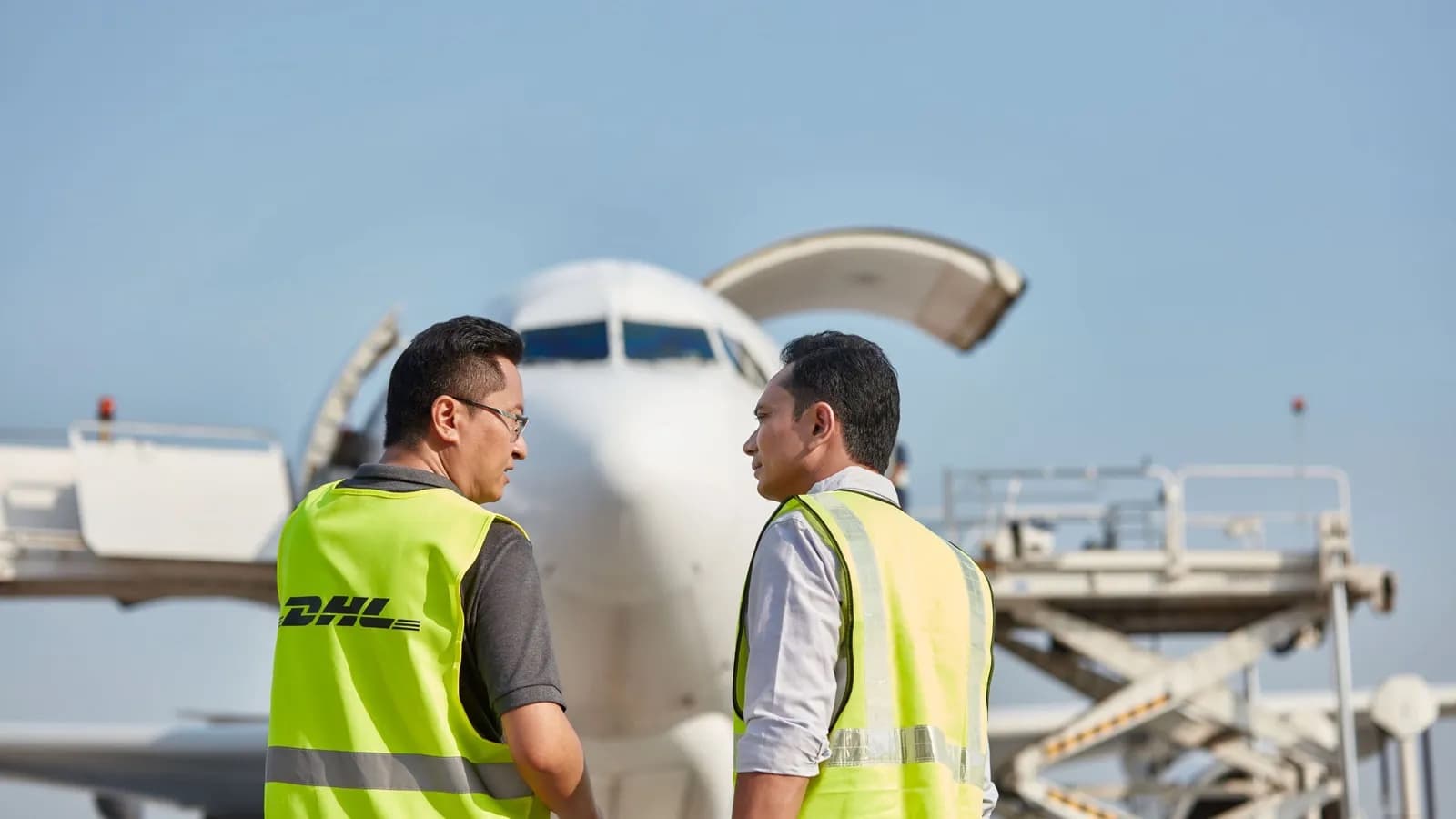
DHL’s Bangkok–Cincinnati Freighter Maps the New Asia–U.S. Air Cargo Story
A thrice-weekly Bangkok–Cincinnati freighter with up to 100 tons per flight shows how AI and semiconductor hardware are reshaping Asia–U.S. air cargo.
4 min · Jul 9, 2026

Korea Just Pre-Sold $950 Billion of Memory
Kim Yong-beom put ~$950B on Korean–US chip cooperation as advance memory orders, not investment. Here’s the SK–Nvidia, Samsung–Broadcom, and Naver split, and what still sits in unconfirmed.
4 min · Jul 25, 2026
TSMC’s $265 Billion Arizona Bet Is Really About Packaging the AI Boom
On its July 16 earnings call, TSMC tied a fresh $100 billion Arizona commitment to packaging capacity so tight it is limiting customers’ growth.
4 min · Jul 16, 2026
Related global reads
Transpacific Bound
AI Hardware Is Filling Transpacific Air Cargo to the Ceiling
Transpacific Bound
DHL’s Bangkok–Cincinnati Freighter Maps the New Asia–U.S. Air Cargo Story
East Table
East Asia cold noodles field guide
AsiaMS
K-beauty crosses the $2 billion mark as U.S. household adoption triples
Goldsea
Asia’s 8 most romantic places and the great love stories behind them