
Foxconn’s Profit Jumps 34%, and It Warns of Tight Supply. Where Are the Bottlenecks?
Hon Hai’s record third quarter ran on AI servers. Chairman Young Liu said chips, memory, and certain key components are tight across AI and consumer electronics. U.S.-bound iPhones increasingly leave India; Nvidia racks are tied to new capacity in Mexico and Texas.
A record quarter, still short on parts
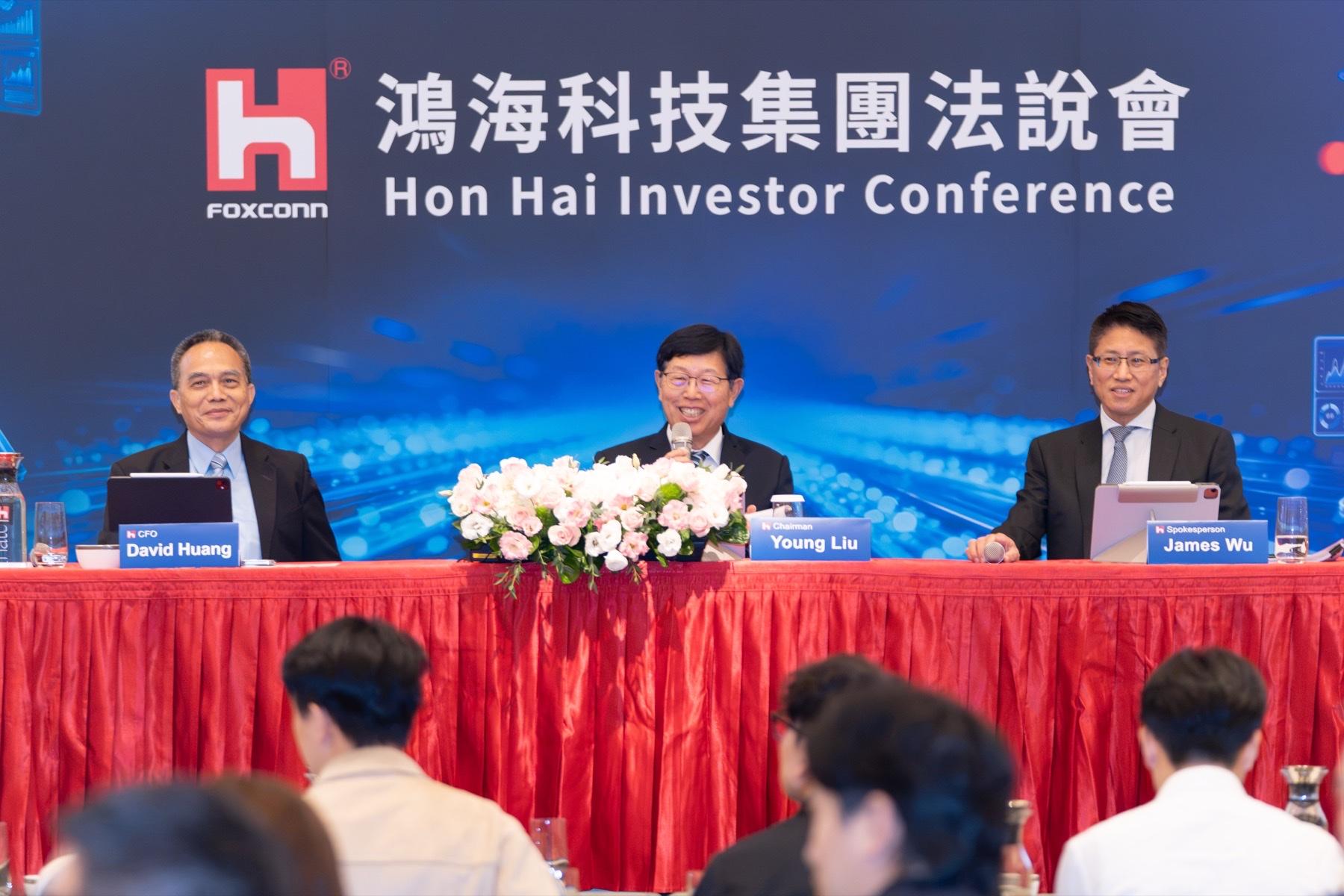
Hon Hai Technology Group, better known as Foxconn, posted third-quarter net profit of NT$77.5 billion on November 12, about US$2.35 billion at the day’s Taiwan-dollar rate. That is up 34 percent from a year earlier and ahead of the LSEG consensus Reuters cited. Revenue climbed 46 percent to NT$3.02 trillion, and operating profit rose 64 percent to NT$115.4 billion.
The growth came from AI servers. Cloud and networking products, lifted by those racks, beat even the optimistic forecasts and drove the record top line, the company said. Chairman Young Liu told investors AI servers are now Foxconn’s most significant growth engine. At the earnings conference, he said cloud and networking already make up more than half of revenue this year and should pass 60 percent over the next three to five years.
Foxconn held its call for strong full-year revenue growth and raised the outlook for all four product segments. For 2027, it expects high double-digit growth in AI rack shipments. Customers still want the boxes. The harder part is getting chips and memory into them on time.
What Foxconn said is tight
The official results note is blunt. Tight supplies of chips, memory, and certain key components are a shared challenge for the AI and consumer electronics supply chains. New production capacity should ease those bottlenecks gradually, Foxconn wrote, but overall demand is still expected to exceed supply next year, and tight market conditions may persist for some time.
Liu said the same at the conference, per Reuters. “Although supply bottlenecks should gradually ease as new capacity comes online, overall demand is expected to still exceed supply next year, and the tight supply-demand situation may persist for some time,” he said.
That warning covers phones and PCs as well as Nvidia racks. The fourth-quarter guide gets more specific on one line. Computing products, meaning PCs and related gear, “continues to be affected by tight memory supply,” which points to a slight sequential decline even as higher component prices lift average selling prices year over year. Smart consumer electronics, the phone-heavy segment, is in peak shipment season, with stronger demand and higher average selling prices. Liu was cautious on PCs. On phones, the company’s own guide still points up.
iPhones for the U.S. lean on India
Foxconn remains Apple’s largest iPhone assembler, and most of the phones it builds for Apple still come together in China. The U.S. sales map looks different. In its coverage of Thursday’s results, Reuters reported that Foxconn now produces the bulk of iPhones sold in the United States in India.
The shortage Liu described still rides with the phone wherever it is finished. Memory and chip lead times matter as much in Tamil Nadu as in Zhengzhou. What has changed for American shelves is the factory map: more of those units leave Indian campuses. Foxconn’s peak-season consumer-electronics guide still assumes solid demand and higher average selling prices into the fourth quarter. The constraint it named is components, while U.S. buyers keep taking new handsets.
AI servers lean on Mexico and Texas
The rack story has a different address. Foxconn is Nvidia’s biggest server maker, and it is building factories in Mexico and Texas for that work, Reuters reported alongside the earnings. Earlier company disclosures already tied U.S. and Mexico capacity to Nvidia’s advanced AI server platforms, including a Houston smart factory for next-generation racks.
Thursday’s results are why that footprint matters. New-generation AI server racks are shipping now. AI server revenue is guided to keep rising quarter to quarter in the fourth quarter; general-purpose servers look only moderate. High double-digit AI rack growth is the 2027 target. The bottleneck Liu named, chips and memory arriving slower than cloud customers want to spend, hits that calendar hardest. A plant in Mexico or Texas can build the chassis. It still waits on HBM and GPUs.
One parts market, two factory maps
The same scarce parts market now feeds two factory maps. U.S.-bound iPhones increasingly leave Indian campuses and still need memory and silicon Foxconn says will stay tight into 2027. AI servers ship, or will soon ship, from Mexican and Texas floors and need those chips and memory at much higher intensity per box.
Profit still followed the AI demand: operating profit grew faster than revenue. Guidance suggests customers have not stepped back. Liu’s open question is timing: whether new component capacity catches the order book, or whether tight supply-demand conditions “persist for some time.” Watch memory lead times into the PC line and into AI racks as separate calendars. The phone story and the server story share the shortage. They do not share the same plant.
Related stories
TSMC’s October Sales Jump Shows the Scale of Taiwan’s Chip Boom
TSMC’s October revenue hit a record NT$586.89 billion, up 59.7 percent year over year. The print fits a hot quarter. It still leaves the customer mix blank.
7 min · Nov 10, 2026

Apple’s Memory Bill Just Hit the Holiday Guide
Apple can absorb some of the AI memory boom in its margin. Shoppers already paid higher stickers. More may follow.
6 min · Nov 3, 2026

Oracle Scrapped the Tencent Chip Lease
The servers were supposed to sit in Southeast Asia. The pressure still landed on a U.S. cloud company.
6 min · Nov 4, 2026

Samsung and SK hynix Are Turning Silicon Valley Into a Contract Signing
Kim Yong-beom says Samsung and SK hynix will announce major long-term memory contracts during Lee’s Bay Area stop. Watch the customers; wait on the figures.
5 min · Jul 24, 2026
Related global reads
Transpacific Bound
TSMC’s October Sales Jump Shows the Scale of Taiwan’s Chip Boom
Transpacific Bound
Apple’s Memory Bill Just Hit the Holiday Guide
East Table
Japan food consumption tax cut
Go Generational
Why remittance fees still eat diaspora budgets
Go Generational
Dual-career visa household planning for diaspora couples