
Panasonic’s New Sila Agreement Puts a U.S. Battery Material Into a Japanese Supply Chain.
Today’s White House fact sheet describes a multiyear deal worth up to $1 billion for silicon-carbon anode material from Sila. Trace the path from Moses Lake to Panasonic’s U.S. cells, and separate what is new from the companies’ 2023 relationship.
What today’s announcements say
A White House fact sheet dated November 18 lists a Panasonic agreement to buy advanced silicon-carbon anode materials from Sila, a U.S. battery-materials company. The fact sheet puts the multiyear deal at up to $1 billion and says it will support an additional 500 American jobs. The item sits among other commercial announcements tied to the administration’s Indo-Pacific trip.
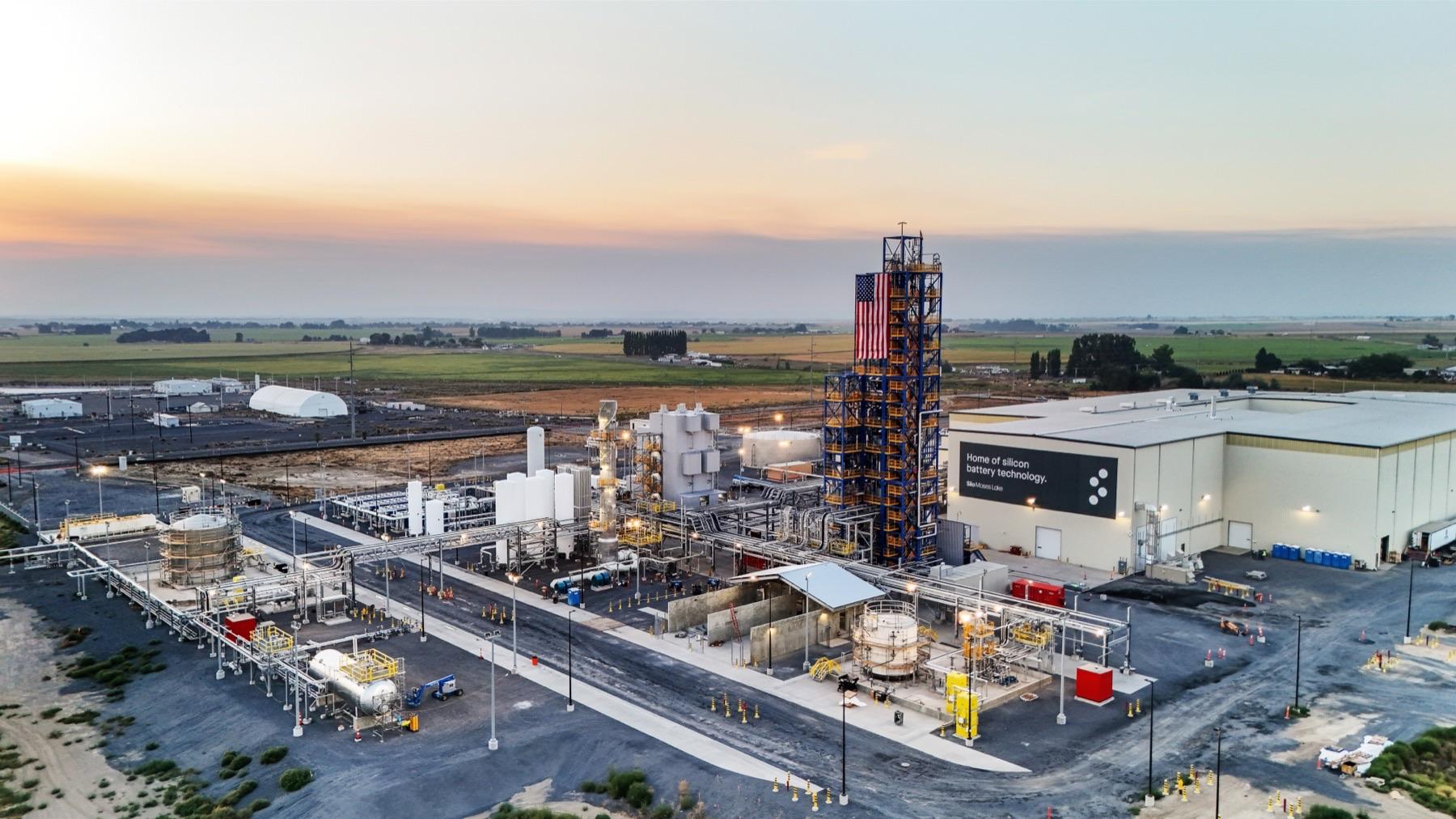
Sila’s release the same day supplies the contract detail. Panasonic Energy Corporation of North America is the buyer. The product is Titan Silicon, Sila’s silicon-carbon anode material, made at the company’s plant in Moses Lake, Washington, for Panasonic battery cells at U.S. manufacturing sites. Sila calls it a multiyear commercial offtake inside a long-term relationship, with the potential for over $1 billion of offtake over time. The companies also say they will collaborate on intellectual property.
Read the dollar language carefully. “Worth up to $1 billion” and “potential for over $1 billion of offtake over time” are ceilings. Neither announcement publishes a firm order total, tonnes, gigawatt-hours, a delivery start date, or the number of contract years.
Follow the material from Moses Lake
The route is simple on a map. Sila makes Titan Silicon at Moses Lake. Panasonic Energy brings that anode powder into U.S. cell plants and builds lithium-ion cells for automotive and other customers. A Japanese battery group ends up with a U.S.-made input inside its North American manufacturing footprint. That is the supply-chain move behind the White House line.
Sila says the offtake should support roughly 500 additional manufacturing and construction jobs at Moses Lake as the company scales for this contract and other commitments. The plant is already running. GeekWire, citing the company, has reported that Moses Lake began operating last year with about 100 full-time employees and an initial capacity sized for roughly 2 gigawatt-hours of cells, depending on how heavily the material is used in each pack. Today’s offtake is the volume signal that would justify a larger buildout. Sila’s CEO, Gene Berdichevsky, said Moses Lake will be ready to supply key customers once the material is qualified, and can expand as needed. High-volume shipping still waits on that qualification.
Sila also recently received a $1.4 billion loan commitment from the U.S. Department of Defense’s Office of Strategic Capital. That financing sits on a separate ledger from the Panasonic purchase. Leave the loan out of the offtake total.
What silicon-carbon anodes are meant to improve
In a typical lithium-ion cell, the anode stores lithium when the battery charges. Most commercial anodes still rely heavily on graphite. Silicon can hold more lithium than graphite by weight, which is why cell makers want more of it in the anode. Pure silicon swells and cracks as it charges, so companies such as Sila sell silicon-carbon composites meant to capture silicon’s capacity gains while remaining manufacturable at scale.
The targets are energy density, charge time, and power: more range or runtime in the same pack volume, a shorter stop at the charger, and stronger bursts of output, if the cell design and thermal system keep up. Sila has previously said Titan Silicon can raise range on the order of 20 percent today, with room to grow, and has talked about much shorter charge times in development messaging. Treat those figures as company performance claims. Panasonic’s qualification data and independent cell results will settle what the gain looks like on a production line.
Silicon-carbon material usually costs more than graphite. The commercial bet is that range, charge speed, and U.S. content are worth the premium on the programs that use it.
What already existed between Panasonic and Sila
Panasonic and Sila have been working on Titan Silicon since before this fact sheet. In December 2023, Panasonic Energy and Sila announced a commercial agreement for the material from Moses Lake, optimized for Panasonic’s next-generation lithium-ion batteries. Volumes and dollar terms were not disclosed. Panasonic framed that deal as a way to put more silicon into its anodes for better performance, range, and charge times, and as part of a longer push toward higher energy density by the early 2030s.
The relationship, the material brand, and the Moses Lake source were already public. What today’s package adds is offtake language with a public dollar potential, a named North American Panasonic Energy counterparty, an IP-collaboration line, the White House “up to $1 billion” wording, and Sila’s estimate of about 500 additional jobs tied to scaling the Washington plant. That is a commercial deepening and a place on a presidential fact sheet. The two companies had already said they would work together on Titan Silicon.
What to watch next
Three follow-ups would make the offtake operational. First, Panasonic’s qualification of Titan Silicon for the cell lines that will use it. Second, published volumes, start dates, or plant names beyond the generic “U.S. manufacturing sites.” Third, a clearer Moses Lake expansion calendar and cost, including when higher output actually begins shipping.
Until then, hold the 2023 commercial relationship and today’s multiyear offtake as related but separate facts. The newer deal carries up-to-$1 billion potential and still lacks disclosed tonnes and a firm total. Japanese cell makers are lining up a U.S. anode input. Moses Lake still has to qualify and scale into the order.
Related stories
Foxconn Is Buying Sony’s Automotive Camera Business. Follow the Factory and the Customer Contracts.
Foxconn signed to buy Sony’s automotive camera-module business. The sensor company stays separate. Watch overseas factory assets still under discussion, OEM contracts moving with the unit, and regulatory close by April 2027.
6 min · Nov 18, 2026
The U.S. Chip Curbs Reach Southeast Asia. What Does a Malaysian Data-Centre Project Have to Recheck?
From Nov. 19, advanced U.S. chips into Malaysia need a license unless a U.S.-headquartered buyer meets reporting rules. Separate controls hit data centres that give significant compute to China-linked tenants. Check both on the same order.
7 min · Nov 17, 2026

BYD, Boeing, Baidu and Google Are Heading to Shenzhen. What Can Companies Learn From the APEC Meetings?
CEO Summit Nov. 17–18; leaders Nov. 18–19. Watch for orders, joint ventures, clearing progress, and leaders’ annexes with calendars.
7 min · Nov 16, 2026
Foxconn’s Profit Jumps 34%, and It Warns of Tight Supply. Where Are the Bottlenecks?
Net profit hit NT$77.5 billion. Liu’s squeeze is chips and memory, while the order book still looks full.
7 min · Nov 12, 2026
Related global reads
Transpacific Bound
Foxconn Is Buying Sony’s Automotive Camera Business. Follow the Factory and the Customer Contracts.
Transpacific Bound
The U.S. Chip Curbs Reach Southeast Asia. What Does a Malaysian Data-Centre Project Have to Recheck?
East Table
East Asia cold noodles field guide
East Table
Japan food consumption tax cut
Medalist News
How Japanese football became a Europe export