
Samsung’s Phone Boss Just Bought the Dip After DX’s First Loss
After DX posted its first quarterly operating loss, Roh Tae-moon bought about ₩700 million in Samsung shares—the day before the stock’s biggest one-day jump since listing.
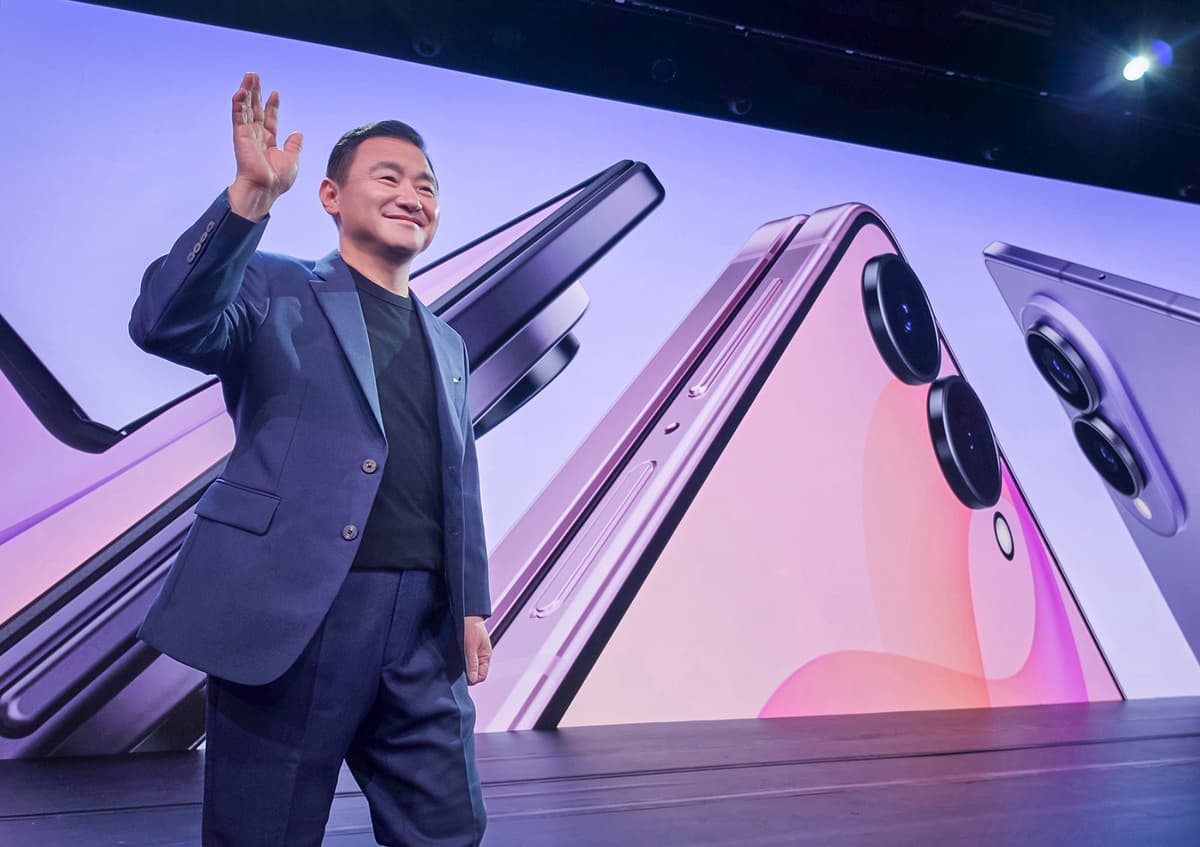
Roh Tae-moon spent July 22 on a London stage selling Samsung’s next foldables. Eight days later he was in the market buying his own company’s stock. The sequence is the useful story: the face of Galaxy Unpacked putting personal money behind Samsung Electronics after the half of the company he runs posted its first quarterly operating loss.
According to filings summarized July 31 by Seoul Economic Daily and The Asia Business Daily, Roh—president and head of the Device eXperience division, the executive Samsung styles as TM Roh in English—bought 3,045 common shares of Samsung Electronics on the open market on July 30 at ₩230,000 a share, about ₩700.35 million in total. His disclosed holding rose to 124,280 shares. Korean markets read the move in a familiar register, “responsible management,” the phrase local coverage uses when a named executive spends his own cash after a soft print.
The soft print was real, and it sat beside a record. Samsung’s July 30 results put consolidated second-quarter revenue at ₩171.5 trillion and operating profit at ₩89.5 trillion, both all-time highs, with the Device Solutions chip division alone contributing ₩127.5 trillion in revenue and ₩89.2 trillion in operating profit. Memory rode AI server demand, HBM4 sales, and rising prices. DX sales fell 9 percent from the prior quarter. Yonhap, citing the devices, television, and home-appliance side of the house, put that segment near ₩48 trillion in sales with an operating loss of about ₩800 billion—the first quarterly operating loss of its kind in the framing Korean wires used for the DX era. Samsung’s own breakout showed the Mobile Experience and Networks businesses at a ₩0.7 trillion operating loss even as Galaxy S26 and A-series revenue held up on a year-over-year view, with visual display and appliances also slightly in the red under cost pressure.
So the company Roh presents at Unpacked is not the company printing the AI margins. It is the one absorbing higher component costs, soft China mobile demand in parts of the chip-adjacent stack, and the marketing load of keeping Galaxy competitive while hyperscalers buy memory by the rack. On July 22 at Old Billingsgate, Roh told the Fold8 and Flip8 audience that as AI becomes more agentic, mobile devices become the most personal entry point. On July 30, the ledger said the personal entry point was still expensive to run.
The next session made the purchase look lucky, which is not the same as causal. Samsung shares closed July 31 at ₩262,500, up 26.81 percent from ₩207,000, the largest single-day percentage gain since the stock’s listing, per Seoul Economic Daily. The value of Roh’s full holding jumped by roughly ₩6.9 billion on paper in a day; the newly bought block alone was up nearly ₩99 million versus his purchase price. Foreign and institutional investors piled in. Overnight U.S. semiconductor sentiment had already turned after strong hyperscaler commentary, and the Philadelphia Semiconductor Index jumped more than 8 percent. Treat Roh’s buy as one signal inside a tape that was already reloading AI names—not as the switch that flipped Samsung by a quarter in a session.
For a transpacific reader, the so-what is organizational more than theatrical. Samsung is living two calendars at once: a memory calendar that looks like SK hynix’s record-and-volatility week, and a devices calendar that still has to sell foldables, TVs, and appliances into a costlier supply chain. Roh’s open-market order says the devices boss is willing to be seen owning that second calendar. It does not fix component costs, China demand, or the gap between Unpacked rhetoric and DX margins.
What to watch next is shorter than a product cycle. Does DX claw back to operating profit in the second half as Samsung leans on Galaxy Z8 and S26 mix, efficiency programs, and the AI features Roh keeps promising on stage. Do other Samsung executives match the buy, as they did in thinner years. And does the stock keep trading like a pure AI-memory proxy, or start pricing the devices scar again once the one-day melt-up cools. Roh bought the dip after DX’s first loss. Memory still wrote the quarter.
Related stories
Why SK hynix’s Record Quarter Sent Its Stock, and Asia’s Chip Sector, Sliding
SK hynix posted the best quarter in its history on July 29. Investors sold anyway, joined by Samsung, Kioxia, and other Nvidia-linked suppliers across Asia.
7 min · Jul 30, 2026

Samsung and SK hynix Are Turning Silicon Valley Into a Contract Signing
Kim Yong-beom says Samsung and SK hynix will announce major long-term memory contracts during Lee’s Bay Area stop. Watch the customers; wait on the figures.
5 min · Jul 24, 2026

Korea Just Pre-Sold $950 Billion of Memory
Kim Yong-beom put ~$950B on Korean–US chip cooperation as advance memory orders, not investment. Here’s the SK–Nvidia, Samsung–Broadcom, and Naver split, and what still sits in unconfirmed.
4 min · Jul 25, 2026

Willie Walsh Leaves IATA Today. On Monday He Runs IndiGo.
India’s largest airline cleared Willie Walsh for an August 3 start. Here’s why the hire matters more for international expansion than for filling another domestic seat.
5 min · Jul 31, 2026
Related global reads
Transpacific Bound
Why SK hynix’s Record Quarter Sent Its Stock, and Asia’s Chip Sector, Sliding
Transpacific Bound
Samsung and SK hynix Are Turning Silicon Valley Into a Contract Signing
AsiaMS
K-beauty crosses the $2 billion mark as U.S. household adoption triples
At the Banquet
The Banquet guide to Seoul
At the Banquet
The return of quiet luxury in Seoul