
Tokyo’s Morning Chip Selloff Closed Flat
The Nikkei fell 892 yen in the morning and finished 11 yen lower. Advantest and Tokyo Electron closed higher. SoftBank and Kioxia did not.
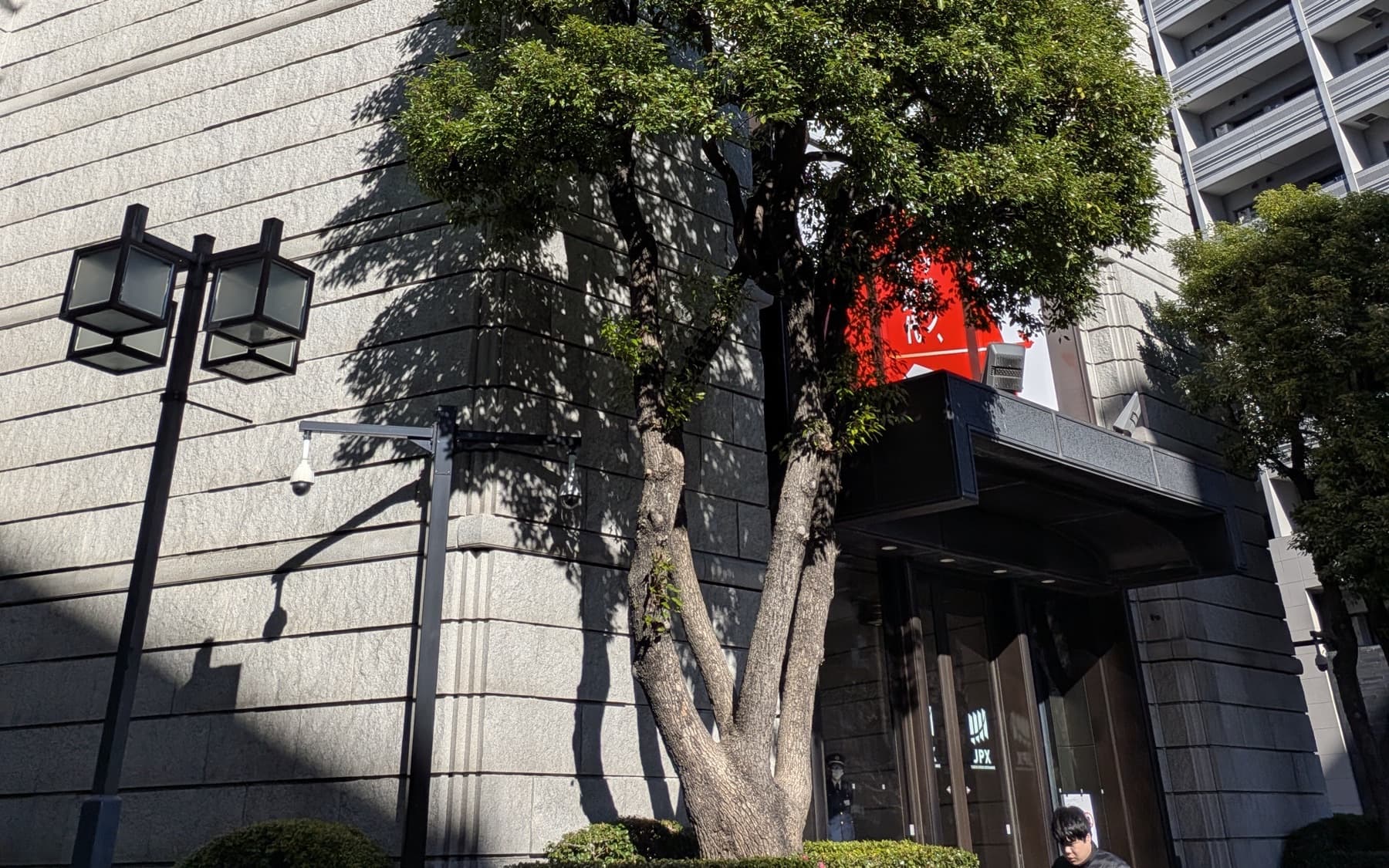
Eleven yen at the close
The Nikkei finished Friday at 69,030.92, down 11 yen, a third straight decline. At 9:20 a.m. it was at 68,150, 892 yen under Thursday’s close.
The Nikkei newspaper put the morning drop past 800 yen, after Wall Street’s chip selloff on Thursday. Buyers took it back. The index traded above Thursday’s close near the end of the session. The same account said the buying reached games and shipping, and that overseas accounts bought back futures ahead of the three-day weekend. TOPIX, the broader Tokyo gauge, rose 0.33 percent, to 4,104.81. On the Prime market, 1,194 stocks rose and 331 fell.
Thursday had already done the damage. The Nikkei fell 994 yen that day, and the technology group accounted for 553 of them. On Friday that same group gave 238 yen back. Consumer stocks took 145 yen off.
The chip trade split
The chip names did not move together.
Advantest, 13 percent of the Nikkei by itself, closed at 41,610, up 1.7 percent. The low was 39,810. Tokyo Electron opened at 11,890 and closed at 12,445. That is up 2.1 percent. SCREEN, another equipment maker, finished about 4 percent higher. Sellers in that group met buyers before the close.
SoftBank Group did not. It owns Arm, the British chip designer. The Nikkei said Arm fell in New York on Thursday, along with Nvidia and Intel. SoftBank opened at 5,690 and closed at 5,803, down 3.9 percent from Thursday. Kioxia, the memory company, closed at 17,505, down 2.2 percent. The low was 17,000. Renesas, which sells chips into cars and factory equipment, closed at 3,600, down 4 percent.
Fast Retailing, the company behind Uniqlo, fell 4 percent, to 71,780. The Nikkei said its outlook for net profit came in below what the market expected. The stock is about 8 percent of the index, large enough to lean on a close that looks calm. The information and communications group, which includes SoftBank, subtracted 127 yen.
What set it off
Thursday in New York is what Tokyo opened on. The Nikkei reported the Nasdaq down 1.25 percent and the Philadelphia semiconductor index down 3.38 percent.
The Financial Times had reported, and Reuters confirmed with a person familiar with the matter, that OpenAI told investors its annualized revenue for September was almost $50 billion. The company had earlier indicated a figure approaching $70 billion. That person told Reuters the gap came mostly from a comparison with Anthropic, the rival lab. Anthropic counts sales through cloud partners such as Amazon Web Services and Google Cloud. OpenAI leaves those sales out, and it did not respond to Reuters. The higher figure was the one in circulation. Tokyo opened by selling chip stocks on the gap. The equipment names did not stay down.
Friday morning, Tokyo time, a Bloomberg report steadied the mood. The Nikkei said Bloomberg had OpenAI expecting annualized revenue of $70 billion or more by year-end, led by sales to companies. Hiroshi Namioka, chief strategist at T&D Asset Management, told the Nikkei that these stocks move hard on whether the firms building AI models are actually making money.
Seoul and Taipei on Monday
Seoul and Taipei were closed. Friday was Hangul Day, so the Korea Exchange did not run a cash session. In Taipei, National Day falls on Saturday, and the Taiwan Stock Exchange shut Friday as the makeup holiday. Samsung, SK hynix, and TSMC did not trade at home.
Friday’s New York close was quieter than Thursday’s. The Nasdaq rose 0.6 percent. The semiconductor index fell 0.4 percent. Monday is when Seoul and Taipei price Thursday’s drop and that quieter close. Tokyo is closed Monday for Sports Day. Its next session is Tuesday, with those two markets already on the board.
If a cargo plan or a supplier visit is riding on Friday’s headline, wait for Monday morning in Seoul and Taipei. Tokyo’s next print is Tuesday.
Related stories
Why SK hynix’s Record Quarter Sent Its Stock, and Asia’s Chip Sector, Sliding
SK hynix posted the best quarter in its history on July 29. Investors sold anyway, joined by Samsung, Kioxia, and other Nvidia-linked suppliers across Asia.
7 min · Jul 30, 2026
Korea’s July Exports Hit Nearly $99 Billion as Chips Almost Tripled
Second-biggest monthly export haul on record, chips above $40 billion for a second month, and a reminder that AI demand is still leaving Incheon even when Seoul equities argue.
4 min · Aug 1, 2026

TSMC’s $265 Billion Arizona Bet Is Really About Packaging the AI Boom
On its July 16 earnings call, TSMC tied a fresh $100 billion Arizona commitment to packaging capacity so tight it is limiting customers’ growth.
4 min · Jul 16, 2026
AI Hardware Is Filling Transpacific Air Cargo to the Ceiling
Xeneta puts Asia–North America dynamic load factors at 90%. May Taiwan–U.S. rates hit $7.02 per kilo. Korean Air’s cargo yield jumped about 42% in the second quarter.
5 min · Jul 24, 2026
Related global reads
Transpacific Bound
Why SK hynix’s Record Quarter Sent Its Stock, and Asia’s Chip Sector, Sliding
Transpacific Bound
Korea’s July Exports Hit Nearly $99 Billion as Chips Almost Tripled
East Table
East Asia cold noodles field guide
Goldsea
The evolution of an Asian American
East Table
Japan food consumption tax cut